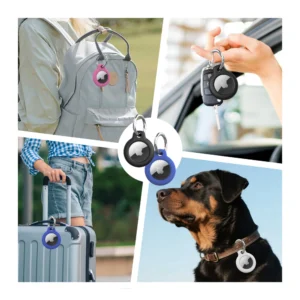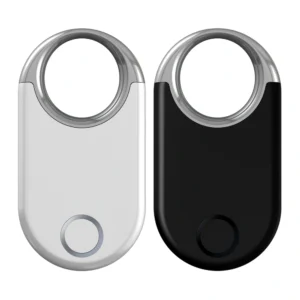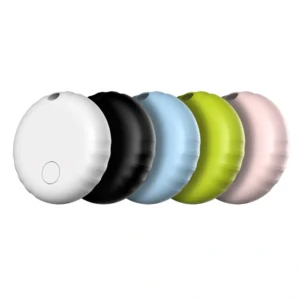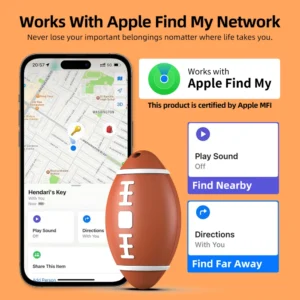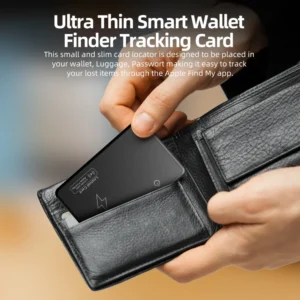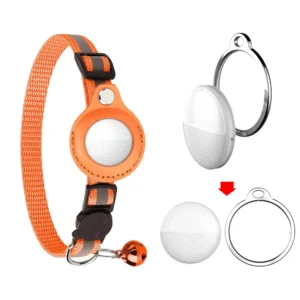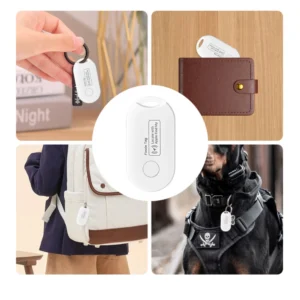
A “dual-system tracker” can mean different things in supplier catalogs. Some products work with an independent app on both iPhone and Android. Others can be configured for either Apple Find My or Google Find Hub, but not necessarily both networks at the same time. A third group combines Bluetooth finding with GPS and cellular connectivity. Buyers should confirm the exact architecture before comparing prices.
This guide explains the four main options—Apple Find My tags, Google Find Hub tags, app-based dual-system tags and GPS trackers—and gives brands, distributors and importers a practical RFQ checklist.
Quick comparison
| Tracker type | Best for | How location is reported | Key buyer question |
|---|---|---|---|
| Apple Find My tag | Keys, wallets, bags and luggage used by Apple customers | Bluetooth plus Apple’s Find My network | Is this exact model authorized to work with Apple Find My? |
| Google Find Hub tag | Personal items used by Android customers | Bluetooth plus Google’s Find Hub network | Which Android versions, regions and network settings are supported? |
| App-based dual-system tag | Short-range finding for mixed iOS and Android users | Bluetooth through the supplier’s iOS/Android app | Does the app provide crowdsourced long-distance finding or only nearby Bluetooth finding? |
| GPS tracker | Pets, vehicles and assets that need location updates over distance | GNSS positioning plus cellular, eSIM, Wi-Fi or another data connection | Which network bands, SIM plan and countries are supported? |
1. Apple Find My tags
An Apple Find My network accessory is designed to appear in the Items section of Apple’s Find My app. It normally uses Bluetooth to communicate with nearby Apple devices, which can relay encrypted location information through the Find My network. It is not the same as a cellular GPS tracker, and buyers should not describe it as continuous real-time GPS unless the product contains separate GNSS and communication hardware.
For OEM sourcing, verify the exact model rather than relying on a general statement about the factory. Ask for the pairing flow, supported Apple operating-system versions, audible-finder behavior, unwanted-tracking protections, battery type, speaker output, enclosure rating and the documentation allowed for packaging and marketing.
Browse Annigou’s Apple Find My tag range.
2. Google Find Hub tags
Google renamed Find My Device to Find Hub in 2025. Compatible tracker tags can use nearby Android devices in the Find Hub network to help report the location of lost items. Google states that network location data is encrypted and provides settings that let users choose how their Android device participates in offline finding.
Compatibility should be checked at model level. Buyers should ask whether the product supports Google Fast Pair and Find Hub provisioning, how identifiers rotate, what happens after a battery replacement or factory reset, and which markets are covered. A label that merely connects to an Android app is not automatically a Google Find Hub network accessory.
See Annigou’s Google Find Hub compatible tracker category.
3. What “dual-system” should mean in an RFQ
The phrase “dual-system” is not a complete technical specification. Put one of the following definitions in the quotation request:
- Independent-app dual system: the same Bluetooth tag connects to the manufacturer’s app on both iOS and Android.
- Selectable finder-network model: the product can be configured for Apple Find My or Google Find Hub. Ask whether switching requires a factory reset and whether one unit can be registered to only one network at a time.
- Two-SKU program: the housing and packaging are shared, but separate Apple-network and Google-network electronics are supplied.
- Bluetooth plus GPS: the product combines nearby finding with GNSS and a data connection. Confirm that the quoted hardware actually includes both systems.
Avoid claims such as “all iPhones and Android phones track the same tag simultaneously” unless the supplier provides a clear pairing demonstration, approved documentation and test evidence for the exact firmware.
Compare Annigou’s dual-system smart tag options.
4. When a GPS tracker is the better choice
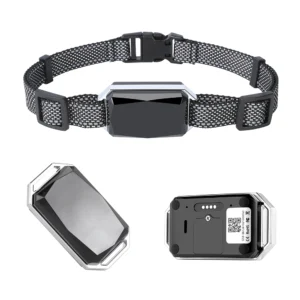
GPS describes satellite-based positioning; it does not by itself send the location to a phone. Most real-time GPS trackers also need cellular, eSIM, Wi-Fi, LoRa or another communication channel. This affects hardware cost, battery life, coverage, certification and ongoing service fees.
Choose GPS when the buyer needs route history, geo-fence alerts or location updates for moving pets, vehicles or assets over distance. Before ordering, confirm GNSS constellations, cellular bands, SIM responsibility, roaming countries, reporting interval, standby assumptions, app subscription, waterproof test method and server/data-retention terms.
Explore Annigou’s GPS tracker range.
OEM/ODM buyer checklist
Network and software
- Exact finder network or app name
- Supported phone operating systems and minimum versions
- Pairing, unpairing, reset and ownership-transfer flow
- Whether firmware updates are supported
- App publisher, privacy policy, server region and subscription fees
Hardware
- Battery chemistry, capacity, replaceability and test conditions
- Dimensions, weight, attachment method and speaker output
- Bluetooth version and tested nearby range
- Waterproof rating with the applicable test report
- Operating temperature, drop test and button-cycle requirements
Compliance and packaging
- Model-specific network authorization or program status
- Radio, safety, battery-transport and market compliance documents
- Unwanted-tracking alert and physical-disable behavior
- Permitted logos, wording and screenshots for retail packaging
- Serial-number, QR-code and traceability requirements
Commercial terms
- Sample price and lead time
- MOQ by color, logo and packaging option
- Tooling or setup charges
- Mass-production lead time and inspection standard
- Warranty, spare units and after-sales responsibility
Questions to include in your quotation request
- Which exact model and firmware are you quoting?
- Which finder network or app does it use?
- Can the same unit work on both iOS and Android, and how is switching handled?
- Is network use simultaneous, selectable or based on separate SKUs?
- Which features have been tested on production samples?
- What OEM logo, color and packaging options are available?
- What are the sample lead time, MOQ and mass-production lead time?
- Which compliance documents apply to this exact model?
Official references
- Apple Find My Support
- Apple: Detect unwanted trackers
- Google: How Find Hub protects your data
- Google Find Hub Network Accessory Specification
Request a model comparison
Send Annigou your target market, use case, preferred network, quantity, logo file and packaging requirements. We can help compare suitable iOS tags, Google Find Hub tags, dual-system options and GPS trackers before sampling. Request a quotation.