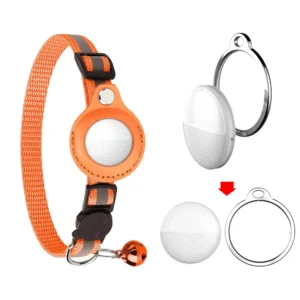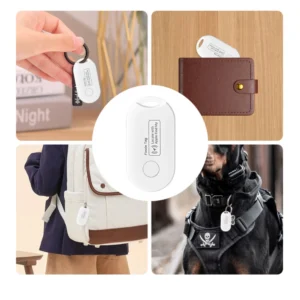
Introduction: the demand for Smart Finder bulk purchases is growing rapidly-explosive growth in the global market
According to IDC’s 2024 Global Smart Hardware Procurement Report, the Global Smart Finder B2B bulk procurement volume in 2023 reached $1.27 billion, up 41% year-on-year, with the North n market accounting for 38% , europe accounted for 32% of the market, the asia-pacific (excluding China) market accounted for 21% , as the core region to drive global growth. Behind the numbers is a shift in the role of Smart finders from consumer electronics“Niche toys” to businesses running“Just-in-time” tools — business-to-business purchases have soared from 29% in 2021 to 57% in 2023 over the past three years, it’s officially entering the scale phase of enterprise applications.

From the perspective of application side, the demand of foreign enterprises for Smart Finder has broken through the single“Anti-loss” function, and extended to asset management, customer operations, supply chain optimization and other dimensions. For example, the U. S. Retail Giant wal-mart in 2023 a single purchase of customized Smart Finder up to 500,000, used for goods display props tracking and member gift distribution; German automaker BMW Group integrated it into its factory tool management system, reducing equipment loss by 68 percent. This multi-industry, multi-scenario overlay of demand is driving Smart Finder bulk buying into a new growth cycle.
So what are the core scenarios that are driving this growth? Based on the typical cases of North , Europe, asia-pacific and other regions, this paper will analyze the five core areas and four emerging trends to reveal the driving logic of global Smart Finder bulk purchasing.
Five key scenarios to drive growth in bulk purchasingーー case and data analysis
1. Corporate gifts and promotions: low-cost, high-exposure“Digital marketing tools”
Scene depth parsing
In foreign markets, corporate gifts and promotional activities on the“Practical + brand recognition” high demand, and Smart Finder with“Low unit price, strong customization, high reuse” characteristics, smart Finder has become the first choice in finance, telecommunications, FMCG and other industries. According to a 2023 PPAI survey, Smart finders are now among the top 3 categories of corporate promotional giveaways, ahead of traditional mugs and laptops, 65% of purchases — far higher than the 38% average for other promotional items.
Its core applications include:
Customer Access: Telecom operators in the user package bonus, enhance the conversion rate of account opening;
Customer Retention: insurance companies in the policy renewal season gift, enhance customer stickiness;
Brand Exposure: exhibition, release will be issued on-site, through the daily use of users to expand brand touch;
Employee benefits: Enterprise Annual Meeting, anniversary of the release of customized, enhance the sense of belonging of employees.
Core reasons for procurement growth (with data support)
The cost of customization is manageable and exposure is quantifiable: Smart Finder’s Logo can be customized for $0.10-$0.30 per Logo, much less than a custom USB stick or charger. Verizon bought 1 million Smart finders with its red Logo in a 2023“5G package with a custom anti-lost device” program that generated 32 million brand impressions, that’s $32 worth of exposure for every dollar spent.
No follow-up costs, high user acceptance: Unlike GPS devices, which require a monthly fee, Smart finders don’t require a subscription fee and allow users to connect directly to their phones. According to a survey by AXA, a European insurance company, Smart Finder has an 82% acceptance rate among users of the“Freebies Option”, far outpacing devices that require bundling (only 35%) .
Scene reusability, enhance the value of gifts: users can not only be used for anti-lost keys, wallets, but also bind children’s schoolbags, pet collars, extend the life cycle. Unilever gave away its Smart Finder in a supermarket promotion in 2023, and the average user used it for 14 months, during which time the brand’s Logo continued to generate exposure.
2. Enterprise asset management and device tracking scenarios: a cost-effective“Lightweight IoT solution”
Scene depth parsing
The need for foreign companies to manage their“Movable assets” is acute — according to 2023 data from the U.S. Asset Management Association (IAM) , global corporate losses due to lost and mislaid assets exceed $1.2 trillion annually, the average“Search cost” for a laptop, projector, etc. is $120 per trip. With the advantages of“Low cost + easy deployment + batch management”, Smart Finder has become a mainstream alternative to traditional GPS locators, especially for assets with medium unit price and high mobile frequency.
Its core applications include:
It equipment management: Tracking office equipment such as laptops, portable hard disks, projectors, etc.
Production Tools Management: Wrenches, calipers, molds and other tools positioning in the factory workshop;
Sample and material management: product sample box in sales team, active material box tracking in marketing department;
Office Furniture Management: Mobile Assets Inventory of co-working spaces, such as tables, chairs, and conference equipment.
Core reasons for procurement growth (with data support)
It costs far less than GPS and is suitable for large-scale deployment: traditional industrial-grade GPS locators cost about $15 to $30 and cost $5 to $10 a month for data; Smart finders cost $1 to $3 and have no follow-up costs.
Support off-line search and batch management to improve efficiency: through Bluetooth disconnection reminder function, real-time warning when assets leave the designated area; cooperate with the enterprise background management system, can view the location and status of hundreds of devices in batches.
Compatible with existing systems: most Smart finders support both iOS and Android, and some have direct access to existing enterprise IoT management platforms (e.g. Microsoft Azure IoT, AWS IoT) .
3. E-commerce and retail value-added service scenarios: “Differentiation weapon” for improving conversion rate
Scene depth parsing
In foreign e-commerce and retail markets, “Value-added services” have become central to differentiated competition — products that offer a“Freebies + accessories” package, according to NRF 2023 data, conversion rates are 34% higher than sales alone. Smart Finder has become a“Value-added first choice” for e-commerce platforms and brands because it can be tied to“High-usage goods” such as luggage, backpacks and Smart home devices, especially in North , Europe’s“Holiday shopping season”(such as Black Five, Christmas) , purchase volume will appear 3-5 times the surge.
Its core applications include:
Freebies: The e-commerce Platform Packs the Smart Finder with the main goods, such as“Luggage + anti-lost device” and“Pet Cage + pet tracker”;
Accessories sales: the brand will be Smart Finder as the main commodity official accessories, such as“Smart Watch + watch anti-lost device”;
Member exclusive: e-commerce Membership System, Smart Finder as a“Full gift” or“Points Exchange” gift;
After-sales value-added: after purchasing high-value goods, Smart Finder as a“After-sales security tool”, such as“Jewelry + jewelry anti-lost device.
Core reasons for procurement growth (with data support)
Increase order conversion rate and customer price: Amazon.com data shows that items with the“Free Smart Finder” tag have a 29% higher click conversion rate and an 18% increase in customer price. In 2023, Amazon’s“Smart Home category” grew 52% year-over-year by bundling Smart finders.
Reduce return rate, enhance customer stickiness: through the Smart Finder“Commodity positioning” function, can reduce the“Loss of goods led to return”. The US luggage brand Tumi, which integrates Smart finders into high-end luggage ($300-$800 each) as standard accessories, saw its return rate fall from 12 per cent to 5 per cent in 2023, while its customer repurchase rate rose 22 per cent.
Differentiation competition, avoid price war: in the category of serious homogeneity, Smart Finder can become a“Non-price competition” breakthrough. Zooplus, a European pet-products e-commerce company, offers a“Pet Cage + Smart Finder” package. Although the price of the package is $15 higher than buying it separately, the package accounts for 68 percent of sales because it addresses the pain point of“Lost pets.” More than your average pet cage.
A global industry case study
In the Smart home business, 72% of the 500,000 Google Find My speakers sold in the US were“Speakers + Smart Finder” packages, 45% increase in sales of Nest speakers.
Travel luggage industry: European luggage brand RIMOWA launched in 2023, “Custom Suitcase + Smart Finder” set, anti-lost device printed with the brand’s classic stripe pattern, can be embedded inside the suitcase, set prices increased by $100, but it still accounts for 35% of the brand’s sales and 92% of customer satisfaction.
Pet supply industry: U. S. Petco pet supply chain to purchase 1 million pet-specific Smart finders in 2023 as“$50 plus” gifts, driven by pet collars, pet cages and other related goods sales growth of 38% , store traffic increased by 21% .
Consumer Electronics: Apple Authorized Reseller Best Buy to sell iPhone accessories with its“Case + Smart Finder” combination, which accounted for 58% of sales of the 800,000 anti-drop devices that support Apple Find My, in the iPhone accessories division, margins rose 19% .
4. The sharing economy and the rental industry: a“Tracking tool” to reduce operational costs
Scene depth parsing
The core pain points of the sharing economy and rental industry are“Fragmentation of equipment, difficulty in tracking, and high maintenance costs,” according to 2023 data from the Share Economy Association, the“Recovery cost” of shared equipment accounts for 27% of total operation and maintenance costs, and some bike-sharing companies have been forced to withdraw from the market due to the high rate of equipment loss (22%) . Smart Finder, with its“Bluetooth + crowdsourcing network” positioning model, has become the industry’s first choice for“Lightweight tracking”, especially for low-cost, densely distributed sharing devices.
Its core applications include:
Shared Mobility: positioning and recovery of shared bikes and shared electric scooters;
Sharing tools: tracking the rental of small tools such as electric wrenches and drills;
Sharing equipment: projectors, cameras, laptops and other electronic equipment rental
Short-term rental: wedding dress, dress, outdoor equipment and other items returned to remind.
Core reasons for procurement growth (with data support)
Crowdsourcing location: crowdsourcing networks like Apple Find My or Google Find My allow users to anonymously upload their location from their nearby phones even when the device is offline, extending the reach of traditional Bluetooth. US bike-sharing company Lime deployed 500,000 Smart finders in cities such as New York and Los Angeles in 2023, raising the recovery rate from 65% to 98% and reducing the number of operations staff by 30% , saving $1.2 million a month in operating and maintenance costs.
The cost is much lower than GPS, making it suitable for dense deployment: a GPS solution -LRB-$15-$25 + monthly fee) is unaffordable because of the low margins on a single shared device, the Smart Finder ($1-$3 + no monthly fee) , on the other hand, enables“All-in-one coverage.”. The European shared power Tool brand Milwaukee Tool purchased 300,000 Smart finders to track rented power tools at a cost of only $600,000 per purchase, a savings of $2.4 million over the GPS solution, the tool loss rate dropped from 18% to 4% .
Small size, easy to install, does not affect the user experience: Smart Finder size is usually only 2-3 cm, can be embedded in the shared device, does not affect the appearance and use. Bird, a us-based company that shares electric scooters, integrated the Smart Finder into the base of the scooter without the user’s awareness. The device’s retrieval time was reduced from an average of two hours to 15 minutes, and the user complaint rate dropped by 42 per cent.
5. Logistics and warehousing tracking scenarios: “Low-cost positioning solutions” for optimizing supply chains
Scene depth parsing
The core need of the logistics and warehousing industry is to“See goods in real time and reduce missed shipments”ー according to 2023 data from the U.S. Institute of Supply Chain Management, the annual loss of global logistics enterprises caused by the wrong distribution and loss of goods is more than 80 billion US dollars, and the“Inventory time” in warehouse management accounts for 35% of the total operation time on average. The Smart Finder, which combines Bluetooth Beacon technology, is an important addition to the industry’s“Low-cost tracking”, particularly for“Short-and medium-haul assets” such as pallets, packages and storage bins.
Its core applications include:
Storage Inventory: Quick positioning and inventory of pallets and shelves in the warehouse;
Short-distance transportation: parcel tracking in intra-city distribution and regional distribution;
Container Management: small containers, logistics box location and status monitoring;
Cold chain logistics: with temperature sensors, to achieve double tracking of cargo temperature and location.
Core reasons for procurement growth (with data support)
Low-cost“Goods visible”: traditional logistics tracking solutions (e.g. RFID, GPS) are expensive ($0.50-$1 per RFID tag, $10-$20 per GPS device) , smart finders can achieve location costs of“Less than $3 per tag” and are suitable for large-scale placement. FedEx used Smart finders to track package pallets at its North American regional distribution centers in 2023, procured 1m anti-drop devices, and reduced pallet counting time from eight hours to two hours per day, the error rate fell from 5 per cent to 0.8 per cent, saving $4.5 m annually.
Seamless integration with WMS for efficient management: most Smart finders support docking with a warehouse management system (WMS) to synchronize cargo location data in real time. European warehousing company DB Schenker Integrated Smart Finder with SAP WMS to track goods from 20 warehouses around the world, reducing order processing time from 48 hours to 24 hours and improving customer satisfaction by 38% .
Support multi-dimensional monitoring to meet compliance requirements: some Smart finders have built-in temperature and humidity sensors to meet the compliance requirements of cold chain logistics and pharmaceutical transportation. Cardinal Health, a US pharmaceutical logistics company, has procured 500,000 Smart finders with temperature sensors to track shipments of medicines, reducing spoilage rates from 3 per cent to 0.5 per cent and compliance rates to 100 per cent.
Other emerging sourcing trends-new growth in global markets
1. Campus safety management: from“Passive prevention” to“Active tracking”
With the increasing demand for“Student safety” and“Asset efficiency” on foreign campuses, Smart Finder has become a new tool for campus management. According to a 2023 survey by NASPA, 42% of North American colleges and universities already use Smart finders for security, primarily for:
Student ID management: Smart Finder integrated into the student ID card, to prevent the loss of documents, while supporting the“Campus access control + consumption” function. Harvard University issued 12,000“Smart ID cards” for new students in 2023, built-in Smart Finder, the loss rate of documents from 25% to 3% , campus security department“Re-card work” reduced by 80% .
Teaching aids and equipment tracking: positioning of laboratory equipment, teaching projectors, sports equipment and other assets. The University of Cambridge has procured 50,000 Smart finders for the management of instruments in the physics laboratory. The loss rate of equipment has been reduced from 18 per cent to 2 per cent, and the preparation time for laboratory lessons has been reduced by 60 per cent.
Child safety management: primary and secondary schools are equipped with“Smart bracelet anti-lost device” to support parents and schools dual positioning. California school district procures 80,000 Smart finders for children in 2023, allowing parents to check their child’s location on campus.
2. Tracking pets and personal items: the retail equivalent of a bulk-buying craze
With the pet economy and increased awareness of personal safety in foreign countries, the demand for Smart Finder at the retail end of the bulk purchase is growing rapidly:
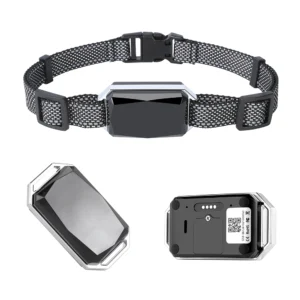
PET supplies retail: Pet Stores, pet e-commerce bulk purchase“Pet collar-type anti-lost device” as a commodity or gift. The U.S. Petsmart Pet chain purchased 1.5 million pet Smart finders in 2023, selling them for $19.99 each and generating $280 million in annual sales, led a 45% increase in collar sales.
Personal accessories: luggage, backpack brand will be Smart Finder as a“Built-in accessories.”. European backpack brand EASTPAK launched the“Backpack + built-in anti-lost device” series in 2023, purchasing 600,000 anti-lost devices supporting Google Find My, which accounted for 42% of the brand’s total sales, the $30 price increase is still in short supply.
Gift retail: during the holiday season (e. g. Christmas, Valentine’s Day) , gift shops buy custom Smart finders in bulk. Hallmark, the US gift chain, bought 800,000 anti-dropping devices with holiday motifs for the 2023 Christmas season, selling them as“Couples gifts”, generating $120m in single-quarter sales, up 65 per cent year-on-year.
3. Government and public agencies: “Compliance-driven” bulk purchasing
Foreign governments and public institutions have strict requirements for“Asset compliance management”, and Smart finders are a low-cost solution:
Documents and records management: Government Departments put Smart finders on file bags and file boxes to prevent the loss of confidential documents. The Federal Bureau of Investigation procured 300,000 Smart finders in 2023 for the management of classified documents, reducing the loss rate from 12 per cent to 0.5 per cent and raising the compliance pass rate to 100 per cent.
Public Equipment Management: the municipal department of street lamp maintenance tools, fire equipment, sanitation vehicle parts tracking. The City of London purchased 450,000 Smart finders for sanitation equipment management. The response time for equipment maintenance was reduced from 4 hours to 1 hour, and the efficiency of sanitation operations was increased by 35% .
Emergency supplies management: location and scheduling of disaster emergency supplies such as medical kits and tents. FEMA will purchase 600,000 Smart finders in 2023 to track emergency supplies for hurricanes, floods and other disasters. The efficiency of supply dispatch will be increased by 70% , and the delivery time of supplies in disaster areas will be reduced by 50% .
4. Travel and tourism: “Value-added services” drive purchasing demand
The travel industry is using Smart finders to improve the customer experience, with a marked increase in demand for bulk purchases:
Hotel services: high-end hotels provide guests with“Room amenities anti-lost device”, such as passports, jewelry, temporary storage tracking. Marriott has reduced the number of complaints about lost items by 82 per cent with the launch of a“Smart Safe + anti-loss device” service at 50 high-end hotels in North America, which allows guests to attach valuables to 200,000 anti-loss devices, customer repurchase rates increased by 29% .
Travel Agency value-added: travel agencies use Smart finders as“Travel package giveaways,” such as“Passport anti-loss devices” for overseas trips. Tui, a European travel agency, bought 500,000 anti-loss devices that support multilingual apps in 2023, accounting for 68% of sales, customer satisfaction increased to 9.2 out of 10.
Scenic Spot Management: the scenic spot provides“Children’s anti-lost device rental” service for tourists. Disneyland will purchase 300,000 cartoon-shaped Smart finders in 2023, which visitors can rent for child tracking. The rental rate is 75% , the number of lost children is reduced by 90% , and the scenic spot service rating is increased by 25 points.
Iv. The market driving force for bulk purchasing: the deep logic of a global perspective
1. Cost advantage: “Low unit price + no monthly fee” irreplaceable
Cost is the core driving force for foreign companies to buy Smart finders in bulk, and its advantages are reflected in“One-time investment + zero follow-up cost”:
The price is much lower than the alternatives: Smart finders cost $1 to $3 compared with traditional location technology, while GPS locators ($15 to $30) and RFID tags ($0.50 to $1 for a reader) have a higher combined cost. For example, a US logistics company tracking 100,000 pallets with GPS would cost $1.5 m plus $500,000 a year in traffic fees, while a Smart Finder would cost $200,000, with no follow-up costs, total cost savings of 80% over three years.
The cost of large-scale procurement is even lower: when purchasing more than 100,000 units, the unit price of Smart Finder can be reduced to 0.8-1.5 dollars. Wal-mart purchased 5 million Smart finders in 2023 at a cost of just $0.90, a record low for a bulk purchase in the world, with a total cost of just $4.5 million for tracking and promotional giveaways, return on Investment: 1:8.
Operation and maintenance costs can be ignored: no maintenance, no data card, users can directly through the mobile App management, enterprises do not need to invest additional operation and maintenance resources. A European tool-sharing company calculates that the number of devices managed by its operations staff has risen from 100 to 500 per person, and its costs have fallen by 75% .
2. Brand customization ability: the core value of“Deep binding marketing”
Foreign companies are in high demand for“Brand exposure” and Smart Finder’s ability to customise can create a“Marketing closed loop”:
Full Link custom coverage: from appearance (color, Logo, material) to function (custom firmware, App interface) , and then to packaging (branded gift box, manual) , can achieve“Full link brand penetration”. Coca-cola of the United States purchased 2 million Smart finders during the World Cup in 2023, with the World Cup mascot and the coca-cola Logo on the outside, packaged in a mini-coke bottle styling and distributed through an offline campaign, the brand received 50 million exposures.
User Interactive Exposure: partially customized Smart Finder supports“App push brand information”, such as discount coupons, new product trailers, to achieve“Passive exposure” to“Active interaction” transformation. Starbucks Europe purchased 1 million Smart finders, which enabled customers to connect to the App and receive coupons for coffee, driving a 32% increase in store sales and 45% coupon usage.
Long-term brand retention: the Average Smart Finder user has been using it for 12-18 months, and the brand Logo can reach users for a long time. Nike of the US has sourced 800,000 Swoosh-branded Smart finders as sneaker giveaways, exposing the brand an average of three times a day during use, far exceeding the memory cycle of traditional advertising.
3. Functional utility: the user value of ‘multi-scenario adaptation’
The core functions of Smart Finder precisely match the needs of enterprises in multiple scenarios, and practicality becomes the key to procurement:
Anti-lost and positioning: the most core function, to solve the“Asset loss” pain point. According to 2023 data from US market research firm Forrester, 82% of enterprises purchased Smart finders primarily to“Reduce asset loss rates”, with the average loss rate dropping by 78% after use.
Disconnection reminder and area fence: real-time warning when assets leave the designated area, suitable for sensitive asset management. Bank of America uses this feature to protect its cash escort boxes, resulting in an alert response time of less than 10 seconds and a 90% reduction in escort security incidents.
Sharing and collaboration: multiple users can share equipment location, suitable for team collaboration. A European design company used Smart Finder to manage the design sample box, team members can view the sample location in real time, project communication efficiency increased by 65% .
Data statistics and analysis: the background can be used to count the frequency of asset usage and movement trajectory, and provide data support for enterprise decision-making. By analysing Smart Finder data and optimising the placement of tools in factories, BMW has cut tool-picking times by 40% .
4. Compatibility: “Cross-platform adaptation” is universal
In foreign markets, where iOS and Android run side by side, Smart Finder compatibility is a big consideration:
System compatibility: over 95% of Smart finders support iOS 14 + and Android 10 + , meeting the needs of enterprise multi-device. Microsoft’s Smart Finder, which is compatible with both employee iphones and Surface phones, scored a 98% compatibility rating.
Ecological compatibility: support Apple Find My and Google Find My two mainstream positioning ecology, covering more than 90% of the global smartphone users. According to European market research, 72% of Smart finders buy support for Google Find My and 68% buy support for Apple Find My.
IoT platform compatibility: access to enterprise IoT platforms such as AWS IoT, Microsoft Azure IoT, and Google Cloud IoT for systematic management. General Electric (GE) will be Smart Finder into the AWS IoT platform, the realization of unified management of global factory assets, cross-platform data synchronization rate of 100% .
5. Application flexibility: multi-industry adaptation for ‘Lightweight deployment’
Smart Finder doesn’t require retrofits to existing equipment, doesn’t require complex installations, and can be quickly adapted to a wide range of industries:
No installation threshold: Paste-type, Buckle-type, embedded and other forms, can be directly used for existing assets. The Smart Finder for US WeWork co-working spaces, which is glued to furniture with double-sided tape, reduced deployment time from one hour per unit to five minutes, with 150 spaces deployed in just one week.
Multi-item adaptation: from tiny keys, U disk, to large pallets, equipment, can be used. A European logistics company uses the Smart Finder to track both“Packages”(pasted) and“Containers”(embedded) at the same time, enabling“Full link tracking” without changing the type of equipment.
Quick Industry Switch: the same enterprise can use the Smart Finder for multiple scenarios, such as“Promotional giveaways + asset management.”. Wal-mart in the United States not only as a member of its gifts, but also with its tracking warehouse pallets, equipment reuse rate of 80% , reduce procurement costs.
Future Trends: From a single tool to a“Smart asset management ecosystem”
1. Deep integration with enterprise IOT platforms-systematized deployment goes mainstream
Over the next three to five years, Smart finders will move from“Point of use” to“Integration with enterprise IoT platforms” and become central to Smart Asset Management:
Data Access: with ERP (enterprise resource planning) , WMS (warehousing management system) , CRM (customer relationship management) system docking, to achieve“Asset data + business data” linkage. For example, Amazon in the US plans to connect Smart Finder data to the ERP system at its FBA warehouse, automatically triggering an“Inventory alert” when pallets are out of position, without human intervention.
Ai-enabled management: Combining AI algorithms to analyze asset movement trajectories and predict“Peak asset demand” and“Loss risk”. The German group plans to use AI to analyse Smart Finder data to predict the“Probability of damage” and“Frequency of use” of production tools, and to stock and schedule them in advance, with an expected 30% increase in productivity.
Cross-enterprise collaboration: upstream and downstream enterprises in the supply chain share Smart Finder data to achieve“Whole chain visibility”. For example, Procter & Gamble plans to share Smart Finder data on pallets of raw materials with UPS, which can plan shipping routes in advance, P & G can view raw material locations in real time, and supply chain response times are estimated to be reduced by 50% .
2. Deep integration with brand marketingーー“Interactive gifts” as a new direction
Smart finders will move from“Passive giveaways” to“Active interactive tools” that connect brands to their users:
Brand penetration on the App side: customizing the App interface to show brand messages and push new product updates. Nike plans to develop an App for its custom Smart Finder, which will allow users to view sneaker maintenance information and new product announcements. It is estimated that the customer interaction rate will increase by 60% .
AR Interactive: with AR (augmented reality) technology, users scan a Smart Finder to see branded content. Starbucks Europe plans to add the AR logo to its Smart Finder, which users can scan on their phones to see how to make coffee, and expects a 45 per cent rise in brand goodwill.
User data feedback: through the use of Smart Finder data, collect user behavior preferences, optimize marketing strategy. Amazon U.S.A. plans to analyze how users use the Smart Finder (e.g. “Frequently used to track backpacks”) and push related products (e.g. backpacks, travel products) , and expects a 35% increase in precision marketing conversions.
3. Customization upgrade-“Functional differentiation” becomes the core of competition
Companies will no longer be satisfied with“Logo customisation” but will demand“Functional customisation” to compete differently:
Firmware customization: develop exclusive functions according to industry needs, such as“Temperature alarm” of cold chain logistics and“Low power automatic reporting” of shared travel. Cardinal Health plans to customise“Pharmaceutical-specific firmware” so that the Smart Finder automatically uploads data to regulators when a drug exceeds 8 °C to meet compliance requirements.
Hardware customization: development of industry-specific forms, such as the pet industry“Waterproof bite”, the medical industry“Aseptic”. A European medical equipment company plans to customize the“Aseptic Smart Finder” for surgical instrument tracking, high temperature sterilization, to meet medical aseptic standards.
Eco-customization: Tapping into the enterprise’s own IoT ecosystem, such as Tesla’s plans for a“Tesla Connect enabled” Smart Finder that lets users view the location of anti-drop devices on Tesla’s in-car screen, “Vehicle-device-person” integration.
4. Upgrade of positioning technology-“Multi-mode positioning” to improve coverage
In the future, Smart finders will combine multiple location technologies to solve the problem of“Indoor blind spots” and“Long-range location”:
Bluetooth + UWB (ultra-wide band) : UWB technology can achieve centimeter-level positioning, suitable for indoor high-precision scenarios (such as laboratory equipment) . Apple plans to launch a UWB-enabled Smart Finder for tracking iPhone accessories to within 10 centimeters, up from 1 meter.
Bluetooth + Lora (long-range Radio) : Lora Technology enables long-range location for kilometers and is suitable for outdoor scenarios (such as electric car sharing) . In the US, Lime plans to use a“Bluetooth + Lora” dual-mode Smart Finder to increase bike-sharing coverage from 100m to 5km, and increase operational efficiency by an estimated 40% .
Satellite positioning assistance: assistance in positioning by satellite signals in extreme scenarios (e. g. , Field Logistics) . A European outdoor equipment company plans to develop a“Satellite-enabled” Smart Finder for tracking mountaineering gear, even in areas without mobile phone signals, and estimates that outdoor rescue efficiency will increase by 60% .
Conclusion: Global Smart Finder bulk purchasing-new opportunities in blue ocean market
The growth of Smart Finder’s bulk purchasing is not an accidental market enthusiasm, but the inevitable result of the superposition of global enterprises’ “Cost reduction and efficiency”, “Digital transformation” and“Differentiated competition”. From the promotional giveaways of North American telecom companies to the tool management of European car factories; from the pallet tracking of American logistics companies to the operation and maintenance optimization of shared tools in Europe, smart Finder is“Low-cost, high adaptation, strong practical” characteristics, penetrate into the global enterprise operation in every aspect.
According to IDC’s forecast, the Smart Finder B2B procurement scale will maintain a compound annual growth rate of 35% from 2024 to 2027, and the market size will exceed $4.5 billion in 2027, north (40 per cent) , Europe (33 per cent) and Asia Pacific (20 per cent excluding China) will remain core markets. Driving this growth is not just the deepening of existing scenarios, but the explosion of new ones-in areas such as campus safety, the pet economy, government compliance and tourism value-added.
In the future, with the improvement of IoT infrastructure, the upgrading of positioning technology, and the increasing demand for enterprise digitalization, Smart finders will no longer be a“Single anti-loss tool”, instead, it will become a core component of the“Smart asset management ecosystem”, creating higher operational value for global companies. For suppliers, seizing the trend of“Customization”, “Systematization” and“Ecologicalization” will become the key to seize this blue ocean market; for buyers, smart Finder will be the optimal solution of“Low-cost digital transformation”, which will give enterprises an advantage in the fierce global competition.