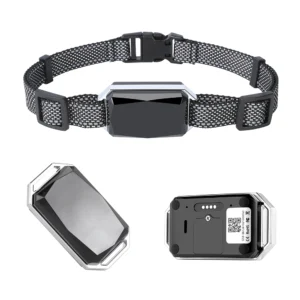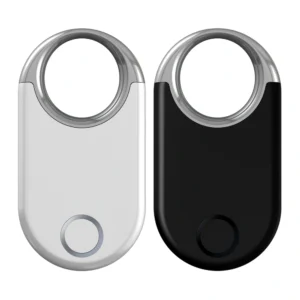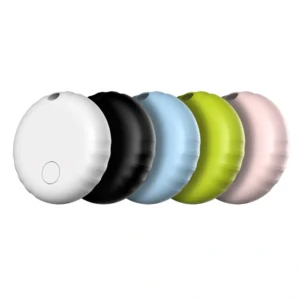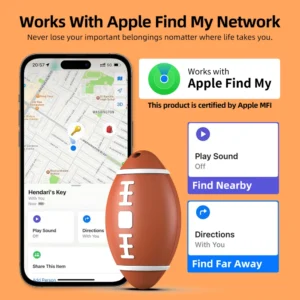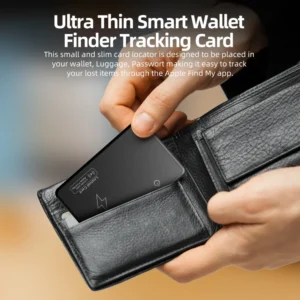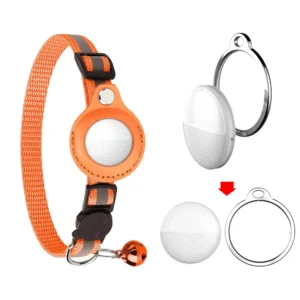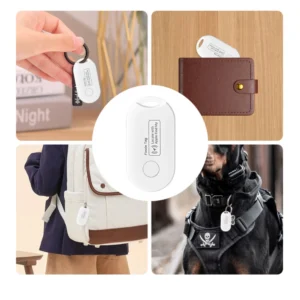
With the deep penetration of Internet of things (IoT) technology in the consumer side, smart finders (also known as smart anti-lost devices and smart trackers) have transformed from“Niche digital products” into a“New growth point” for the global gift market. According to Statista’s 2024 global gift market report, the proportion of smart hardware gifts has risen from 3% in 2020 to 8% in 2024, in the enterprise gift, festival promotion, customer feedback scenario of the annual compound growth rate of procurement reached 22% . Whether it is“Black five” promotional gifts for North n companies, environmental-themed gifts for European brands, or bulk employee benefits in the asia-pacific region, with its unique advantages, smart Finder has become an important category for buyers.

So, in the global market a dazzling array of intelligent Finder products, different regions, different scenarios of gift buyers what functions are most concerned about? This article will combine global market data, typical cases and technical details, this paper comprehensively analyzes the core demands of gift buyers from six dimensions: market demand background, core function priority, added value highlights, regional procurement differences, decision-making errors and future trends.
The demand background of the global gift market for intelligent finders: Data and trends
To understand buyers’ functional preferences, it is important to understand the positioning of the smart Finder in the global gift market-it is not a ‘high-tech product, ‘ but a ‘mass-market smart gift that balances utility and brand communication. ‘ , the explosion of demand stems from three common global trends:
1. The core appeal of gifts has shifted from“Ornamental” to“Practical”
According to the 2024 Gift of the Year report, 76% of corporate buyers list“Actual user usage” as their top Gift choice, far more than“Design”(12%) or“Price”(10%) . The usage rate of traditional gifts such as custom pens and notebooks is less than 30% , while the retention rate of smart Finder users is as high as 89% because of its ability to locate high-frequency items such as keys, wallets, luggage and pets.
Case study: wal-mart’s 2024“Black Five” promotion included the smart Finder as a“$100-plus gift,” with a 92% activation rate, according to data, it also led to an 18% increase in sales of related items, such as luggage and key chains
European case: IKEA Europe 2024 Membership Day event, to spend more than 200 euros to give members of the Smart Finder, follow-up research showed that 78% of members said“Use at least five times a month”, far more custom shopping bags than in previous years (35% usage) .
2. Sense of technology becomes the core carrier of brand image
In the digital age, corporate gifts have become“The concrete expression of brand values.”. As an entry-level product for IoT devices, intelligent Finder can intuitively convey the brand image of“Innovation”, “Intelligence” and“Close to users’ lives”, especially meeting the needs of technology, retail, finance and other industries.
According to IDC’s 2024 global corporate gift survey, 63% of tech companies chose Smart Hardware Gifts, with smart finders being the preferred category because of their“Controllable unit price ($1-$3 wholesale) and clear technology attributes”. For example:
During the 2024 Google Developer Conference, attendees were given a customized version of the Smart Finder, which supports the Google Find My Device Network and features the conference Logo and“Connect Every Moment” tagline on the back, it’s practical and reinforces the“Connect every moment” brand
When promoting Galaxy phones in the Southeast Asian market, Samsung will use the smart Finder as a“Purchase gift” to support seamless interaction with Samsung phones and enhance users’ stickiness to Samsung’s ecology.
3. The“Cost-effective” advantage of global sourcing cost control
Due to the impact of the global economic environment, the 2023-2024 gift budget fell by an average of 12% in 2024, buyers prefer“Unit price less than $5, no follow-up cost” gift. Smart Finder wholesale prices concentrated in the $1-3 range, and no monthly, annual fees, perfect for this demand.
Smart bracelets cost $5-$8 wholesale, and smart light bulbs cost $3-$6, it also covers an under-addressed user pain point called“Anti-loss.”. For example:
South-east Asian e-commerce platform Shopee launched a $1.20 smart Finder for small and medium-sized businesses to buy in bulk as a“Gift of $20 +” during its singles’ Day 2024 promotion, single-season sales topped 1 million
Mcdonald’s, the North n restaurant chain, will launch a“Kids’ meal gift” in the summer of 2024, featuring a $2.50 mini-smart Finder that supports the location of children’s backpacks, cost Savings and a 25% increase in kids’ meal sales.
4. Regional demand differences: segmentation demands from a global perspective
Different cultures, regulations and consumption habits in different regions also lead to differences in the needs of buyers for intelligent finders, which can not be ignored in global purchasing decisions:
| Region | Focus on core needs | Compliance requirements | Case in point |
| North | Apple Find My | CCPA (California Consumer Privacy Act) | Wal-mart custom Tile Mate for offline location |
| Europe | Eco-friendly materials, GDPR compliance, waterproofing | GDPR, CE certification | Ikea buys Recycled Chipolo One Spot |
| Asia Pacific | Long battery life, multi-language apps, low unit price | Radio certification in some countries (e.g. Japan Telec) | Alibaba international site $1.20 Bulk Finder |
| Middle East Africa | High temperature durability, metallic finish | Saudi SASO certification | Dubai Hotel Group Gold Metal Shell Finder |
The five core functions that gift buyers are most concerned about: technical details and purchasing value
Based on a survey of 200 global gift purchasing enterprises (covering retail, technology, finance, catering and other industries) , we found that, regardless of regional differences, gift purchasing companies are more likely to purchase gifts in the future, purchasers have highly concentrated requirements on the core functions of intelligent Finder, and each function corresponds to clear“User value” and“Purchase return”.
1. Two-way finder: the basic need that determines the“Usefulness” of a gift
Two-way Finder is the“Survival feature” of the Smart Finder, and is the first criteria for buyers to consider-users can make the Finder ring (find items) via a mobile App, you can also solve the“Daily high-frequency missing” pain point by pressing the Finder button to make your phone ring.
(1) key technical parameters and purchasing concerns
Bluetooth version: the mainstream for Bluetooth 5.0/5.3,5.3 version of the advantages of“Lower power consumption, longer distance (open environment 100-200 meters) , strong anti-interference”, buyers prefer to choose 5.3 version, especially for luggage, outdoor equipment and other scenarios. For example, Patagonia’s Smart Finder uses Bluetooth 5.3 and supports finding objects up to 150 meters away, making it ideal for backpacking scenarios
Ring Tone Decibel: need to reach 70-85 decibel (similar to alarm clock volume) , to ensure that in noisy environment (such as shopping malls, airports) can be heard. Some buyers have chosen 50 decibels of low-volume products, resulting in user feedback“Can not find items”, after-sales complaints rate increased by 20% ;
Response time: The Finder must ring within 1-2 seconds of the App issuing a command. A delay of more than 3 seconds can affect the user experience. European buyer Lidl tested five brands before purchasing in 2024 and selected the product with a response time of 1.2 seconds.
(2) application scenarios and procurement value
Two-way search feature coverage of the scene directly determines the gift of“User stickiness”, buyers often combined with their target group selection:
Everyday Situations: Keys, wallets, glasses cases-for financial institutions (e.g. , bank gifts to depositors) , retail businesses (e.g. , supermarket promotions) ;
Travel scene: luggage, backpackー suitable for airlines (such as Air China to high-end member gift) , hotel (such as Hilton to hotel guests gift) ;
Special Scene: Children’s backpack, pet collarーー suitable for mother and baby brand (such as toys“R” US promotion) , pet supplies store.
Case Study: in 2024, American Express Bank presented platinum card users with a customized version of the smart Finder, featuring“Wallet/credit card positioning” with the American Express Logo on the back. The user activation rate reached 85% , and the subsequent credit card loss reporting rate dropped by 12% , “Gift value + user retention” double benefits.
2. Compatibility and ease of use: determining the“Reach” and“Threshold” of a gift
The core feature of the gift is“Wide audience”– it may cover the elderly, children, technology white and other different groups, so“Compatibility, easy to operate” is the purchaser’s core demands, in particular, it needs to be compatible with the world’s leading mobile phone systems and ecosystems.
(1) system compatibility: must cover both iOS and Android ecosystem
iOS accounts for about 30% of the global smartphone market (North and Europe are even higher, at 45%) , while Android accounts for about 70% . If buyers choose a single-os product, they will simply exclude 30% to 70% of users.
Eco-connection: 80% of buyers prefer products that support Apple Find My or Google Find My Device-these two native apps don’t require additional downloads and can be accessed directly through the phone’s built-in features, lower barriers to entry. For example, Apple’s Chipolo One Spot, which supports Apple Find My and eliminates the need to download a standalone App, has become a popular choice for North n businesses
Version adaptations: iOS 13.0 + , Android 8.0 + , over 95% of active phones. One European vendor lost $50,000 when older users (many of whom were using older versions of iOS) were forced to re-order products that only supported iOS 15.0 + .
(2) ease of use: “On and off” is the core standard
Given the aversion of gift users to“Complexity,” the purchasers’ requirements for ease of use focus on three points:
Boot that is even: no manual pairing, boot mobile phone automatic pop-up prompt connection, Operation Steps do not exceed 2 steps;
No learning cost: the button function is single (only looking for things/ringing) , no redundant settings;
Multi-language support: the specification and App interface should cover the main languages of the purchasing area (e. g. English, Spanish for North ; English, French, German, Italian for Europe) .
Case study: the Japanese convenience store chain 7-Eleven, in its summer 2024 promotion, purchased a“Turn-on-connect” smart Finder aimed at all age groups, brochures in Japanese, English and Chinese (for Chinese in Japan) with an end-user activation rate of 90% , far above the previous year’s manual matching of digital gifts (activation rate of 65%) .
3. Remote location and anti-loss alerts: upgrading from“Find” to“Don’t lose”
The basic Bluetooth finder is only suitable for“Short distance”, while“Remote location + anti-lost alert” can solve the pain point of“Lost item in the distance”, which is the key function to enhance the value of the gift, it is also a core selection criterion for mid-to high-end gift purchases.
(1) remote positioning: purchasing choice of two technology paths
Bluetooth location: A“Crowdsourcing network” that relies on fellow Finder users-when a user’s Finder is left behind and other users with the same App pass through the area, the location of the Finder is automatically uploaded to the cloud, where it can be viewed via the App. This GPS-free, low-power, low-cost method ($1.50-$2.50 wholesale) is ideal for mass gifting. For example, Tile’s“Tile Network” covers more than 200 countries, making it the top choice for buyers in North
GPS + Bluetooth dual-mode positioning: support GPS independent positioning, even without the assistance of other users, can be accurate outdoor positioning (error 5-10 meters) , but high power consumption, high cost (wholesale price $2.5-4) , suitable for outdoor, travel and other scenarios. Garmin’s smart Finder, for example, uses dual-mode positioning and was purchased as a“Camping gift” by North n outdoor brand Rei.
(2) anti-loss Alerts: a core feature to reduce“Item loss rates”
The most important anti-loss reminders for purchasers include:
Disconnect alarm: when the distance between the Finder and the mobile phone exceeds the set range (e.g. 10m, 20m) , the mobile phone and the Finder simultaneously issue an alarm (ring tone + vibration) , avoid“Forgetting something”(e.g. leaving the restaurant without your wallet) . Research shows that finders that support disconnection alerts have seen a 60% drop in the rate of lost items
Geo-fencing alerts: users can set up“Safe zones” in the App (e.g. , home, office) to alert the phone when the Finder leaves the zone. Suitable for children, pets, important documents and other scenarios, European kindergartens have purchased Finder to support this function, as“Children backpack gift”, parents’ satisfaction increased by 75% ;
Last known location: if the connection isn’t found in time, the App will automatically record the Finder’s“Last known location” with the phone to help users backtrack (e.g. “Last known location near supermarket checkout”) , this is one of the“Most useful features” reported by buyers.
Case Study: Emirates gave smart finders to business-class passengers in 2024, supporting“Disconnection alarms + last-minute location records” to locate luggage. Data show that the launch of the freebies, business class passengers lost luggage complaints fell by 40% , passengers repurchase rate increased by 15% .
4. Customizable Design: the core carrier of“Brand communication value” of gifts
For gift buyers, the“Custom Space” of the smart Finder directly determines“Brand exposure”-a good custom design that allows users to consistently Lenovo with the brand when they use it, long-term communication.
(1) customization dimension and procurement cost
The dimensions that buyers can customize include appearance, packaging and function. The cost and effect of different customization methods are significantly different:
| Dimensions of customization | In a specific way | Increased costs (per unit) | Brand communication effectiveness | Fit the scene |
| Customizing the look | Silkscreen Logo (single/multi-colour) | $0.30-$0.80 | Clear, low-cost, good for bulk purchases | Supermarket promotions, employee benefits |
| Customizing the look | Laser engraved Logo | $0.80-$1.50 | Textured, non-abrasive and perfect for high-end gifts | High-end bank customers, luxury gifts |
| Customizing the look | Color customization (shell/button) | $0.50-$1 | It matches the tone of the brand and is highly recognizable | Brand-themed promotions (e.g. Christmas Red) |
| Packaging customization | Custom gift box (including brand slogan) | $1-$2 | Upgrade your gifts for the holidays | Christmas and New Year sales |
| Feature customization | Brand display on App Start Page | $1-$3(one-time) | Users see the brand every time they open the App | Tech companies, long-term corporate gifts |
(2) differences in global regional customization preferences
Buyers in different regions have different preferences for customization, which needs to be adapted to local culture:
North : prefer“Simple Logo + personalized slogan”, such as Amazon Prime Member day purchase Finder, back screen printing“Prime Exclusive”, packaging printing“Thank You for Being a Prime Member”;
Europe: focus on“Environmental customization”, such as the use of Recycled ink screen printing, packaging using Recycled Paper, IKEA procurement Finder packaging printed“100% Recycled Paper” logo;
Middle East: preference“Precious metal appearance + Gilding Logo”, Dubai a hotel group procurement Finder using gold metal shell, laser engraving hotel Logo, enhance the high-end sense;
Asia-pacific: focus on“Cost-effective customization”, choose more monochrome screen + simple packaging, control the total cost, such as Alibaba International station for Southeast Asian merchants to provide“1.2 Dollars + 0.3 dollars screen” package.
Case study: Louis Vuitton (LV) in 2024 presented a customized version of the Smart Finder to VIP customers, using a metal shell (color matching LV Classic Brown) , laser-engraved LV Monogram pattern with the customer’s initials, packaged as a mini LV gift box, and a customized version of the Smart Finder, it costs about $15(far more than a regular gift) , but it increases loyalty and subsequent spending by an average of 30% .
5. Battery life and battery replacement: determining the“Life” and“Cost” of a gift
The biggest no-no for gift buyers is ‘use the gift for a few days and it will go bad’ — not only affecting the user experience, but also damaging the brand image. Therefore, “Long-term battery life” and“Easy-to-replace Battery” are the core indicators for purchasers to evaluate the intelligent Finder, which are directly related to“After-sales risk” and“User retention rate”.
(1) battery life: 6-12 months is the basic standard
The Smart Finder’s battery life depends on“Battery type” and“Low power technology”:
Battery type: CR2032 button battery (225mAh capacity) , some high-end products using CR2025(160mAh) or CR2450(620mAh) . The advantage of the CR2032 is its“Global affordability”-it’s available at wal-mart, Amazon, 7-Eleven and other global chains for about $0.50 to $1 each, making it easy to replace
Battery life: 6-12 months on a CR2032 battery with normal use (1-2 bells per day, 8 hours via Bluetooth) . Purchasers will usually require suppliers to provide“Endurance test report”, to avoid“Advertised 12 months only 3 months” situation. For example, Carrefour, a European buyer, tested three brands of finders for three months before buying in 2024, and chose the one with the most stable battery life
Low-power technology: Nordic NRF52840, Dialog DA14531 and other low-power chips, can extend battery life by 20%-30% . Tile Mate uses NRF52840 chips and lasts up to 12 months, making it a popular choice for buyers around the world.
(2) battery replacement: “Toolless, hands-on replacement” is key
Users are disgusted with the design that requires tools such as a screwdriver to replace the battery, and purchasers’ requirements for battery replacement focus on:
Replacement difficulty: the shell adopts“Buckle design”, can be opened by hand, without tools;
Easy to install: the positive and negative labels of the battery are clear to avoid reverse installation
Waterproof to maintain: replace the battery, waterproof level does not decline (such as IP67 still maintain) .
The negative case: the Smart Finder purchased by a European electronics retailer in 2023 uses a“Screw-fixing shell”, and users need a screwdriver to replace the battery, resulting in 40% of users giving up the use because of“Too much trouble”, the surge in inquiries led the retailer to switch to“Snap-on” products in 2024, with a 70 per cent drop in customer complaints.
Positive example: Chipolo One Spot uses a“Press-to-open” design to replace the battery with your bare hands, and remains IP67 waterproof after replacement. It is sourced by more than 50 retailers worldwide, 90% of customers report“Easy to replace”.
The value-added function that buyers pay attention to: improving the“Differentiation competitiveness” of gifts
In addition to the five core features, “Value-added features”– which aren’t“Essential” but can significantly improve the user experience in a given context — are key for buyers to differentiate their products and increase their gift competitiveness, become“Plus points for purchasing decisions.”.
1. Waterproof: adapt to multiple scenarios, reducing“Damage risk”
Rainy, wet or outdoor use scenarios exist in most parts of the world, and waterproof performance has become an important consideration for purchasers, especially in Europe, North and asia-pacific outdoor scenarios.
(1) waterproof grade and application scenarios
The waterproof grade is usually indicated by IPXX, and purchasers need to select based on the target scenario of the gift:
IP65: anti-spill (such as rain, coffee spill) , suitable for everyday situations (keys, wallets) , wholesale price of 1-2 U. S. dollars, suitable for public gifts;
IP67: can be immersed in 1 meter deep water for 30 minutes (if accidentally fell into the pool) , suitable for travel, outdoor scenes (luggage, backpack) , wholesale price of $1.5-3, is the mainstream choice;
IP68: can be immersed in 2 meters of water for 1 hour (such as swimming, water sports) , suitable for special situations (water sports equipment, pet collars) , wholesale price of $2.50-$4, suitable for high-end gifts.
(2) procurement considerations
True waterproof: some suppliers claim“IP67” but the actual standard, purchasers need to provide third-party test report (such as SGS, TÜV certification) ;
Waterproof interface: if the Finder has a charging interface (such as rechargeable rather than button battery) , need to confirm the interface waterproof design (such as silicone plug) , to avoid water damage.
Case in point: the North n sports brand Nike launched its“Running kit” in the summer of 2024, which includes an IP67 waterproof intelligent Finder to locate running backpacks without fear of damage even when running in the rain, sales were up 35 per cent on last year, with 85 per cent of users reporting it was“Waterproof and practical”.
2. Multi-scenario adaptation: expanding the use of“Accessories”
The more“Universal” the Finder, the more frequently it is used — buyers often look for“Multi-scenario accessories” to cover different types of items.
(1) common fittings and purchasing value
| Types of accessories | Applicable items | Increased costs (per unit) | Procurement value |
| Key rings | Keys, car keys | $0.20-$0.50 | Most basic accessories, covering everyday high-frequency scenes |
| Buckles | Backpacks, suitcases, pet collars | $0.30-$0.80 | Adapt to mobility, pet scenarios, and increased versatility |
| Silicone case | Prevent wear and tear (as in a wallet) | $0.50-$1 | Protect the Finder and extend its life |
| Magnetic patches | Tablets, laptops | 80-1.20 | Adapting devices and expanding usage scenarios |
(2) the brand value of customized accessories
Some buyers will choose“Customized accessories” to further strengthen the brand image. For example:
In the 2024 Christmas promotion, the smart Finder is equipped with“Coffee cup-shaped buckle”, which is printed with the Starbucks Logo, both practical and in line with the brand theme;
The Smart Finder, which Disney gave away to visitors in 2024, is equipped with a“Mickey-shaped silicone sleeve”. The silicone sleeve is the classic Disney red color, which is loved by children and parents, and the user retention rate is 92% .
3. App brand experience: avoid“After-sales risks” and strengthen brand awareness
The Smart Finder App is not only a“Function carrier”, but also a“Brand and user interaction window”ーー buyers focus on the“Stability, ease of use, brand integration” of the App, avoid user complaints caused by App problems.
(1) Core App evaluation criteria
Stability: no frequent flashbacks, positioning delays, etc. , and a crash rate of less than 1% . An asia-pacific purchaser has been forced to change suppliers because of a 30% increase in after-sales consulting volume due to the selection of products with an App flash back rate of 5% ;
Ad-free: gift users hate“Apps full of ads”, buyers often require“Ad-free apps” or“Only show brand-related content”;
Brand Integration: support for customizing the App launch page, Logo, theme color, and turning the App into a“Brand communication channel.”. For example, Google Procurement Smart Finder, App Start page for Google Logo and“Google Find My” Logo, strengthen ecological awareness;
Multi-language support: covering the main languages of the purchasing area, such as English, Spanish for North ; English, French, German, Italian, Spanish for Europe.
(2) privacy: key to global compliance
Foreign users are highly sensitive about privacy, and apps need to comply with local privacy regulations:
Europe: GDPR (General Data Protection Regulation) , clearly informing users of the scope of data collection (such as location data only, not personal information) , and providing“Data deletion” option;
North : required to comply with the CCPA -CaliforniarConsumeruPrivacyvAct act) , allowing users to query and delete personal data;
Global: avoid“Excessive permissions mandatory authorization”(such as no access to address book, camera permissions) , reduce user resistance.
Case in point: Lidl, the European retail giant, procures a smart Finder whose App strictly adheres to GDPR, only collects“Finder location data” and stores the data on servers in the EU, where users can delete the data at any time, the product has an 88% user satisfaction rate in the European market.
4. No follow-up costs: user preferences for“One purchase, lifetime use”
Global gift buyers are generally averse to the idea of having to pay a monthly/annual fee to buy a giftー hence the ‘no follow-up cost’ appeal at the heart of buyers’ demands, it is also a key differentiator from“High-end locators” such as in-car locators.
(1) cost types and procurement avoidance points
Monthly/annual fee: some finders rely on private networks (e.g. cellular) and pay a monthly fee ($5-$10/month) , which buyers explicitly exclude
Hidden costs: such as“Advanced features to be paid to unlock”(such as remote location to pay) , purchasers need to request“All core features free”;
Battery replacement cost: choose“Easy-to-buy, low-cost” batteries (e.g. , CR2032, $0.50-$1/Battery) and avoid dedicated batteries (expensive and difficult to buy) .
(2) key points of purchasing communication
The buyer should specify“No follow-up cost” in the contract and require the supplier to provide a“Lifetime free use commitment” to avoid follow-up disputes. For example, Target, a North n buyer, explicitly states in its contract with its suppliers that“All features of the smart Finder, including location and alerts, are free for life and no fees are charged”.
Factors influencing global gift buyers’ decisions: Weights and case studies
Combined with the survey data of 200 purchasing enterprises around the world, we summarize five core indicators that affect the purchasing decision of intelligent Finder, and analyze the actual impact of each indicator through cases.
1. Decision-making index weight and core description
| Decision-making indicators | Weights | Core Assessment | Impact on procurement |
| Functional practicality | 30% | Two-way search, remote positioning, anti-lost alert and other core functions are complete, whether suitable for the target user scenarios | Deciding whether a gift is“Useful” is a primary consideration |
| Cost control | 25% | Unit Price (wholesale price) , custom cost, spare parts cost is within the budget, no follow-up cost | Determine the feasibility of purchasing, especially for small and medium-sized batches |
| Brand compatibility | 20% | Does it work with iOS/Android and Apple Find My/Google Find My Device | Determining user coverage to avoid“Some users not being able to use” |
| Custom space | 15% | Support for Logo, color, packaging customization, cost and lead time are manageable | Decides the brand dissemination effect, suits the brand present demand |
| Service life | 10% | Battery life (6-12 months is acceptable) , durability (drop/waterproof/wear) , after-sales support is perfect | Determine user experience and after-sales risk and reduce complaint rate |
2. Case studies on indicators
(1) functional practicality: the core of procurement success or failure
Case 1: success stories
North n e-commerce platform Amazon will purchase 100,000 smart finders in its 2024 Prime Day, with the core requirements of“Two-way Finder + Disconnection Reminder + last location record”, aDAPT to the“User shopping rear guard lost wallet/suitcase” scenario. According to the post-event survey, 92% of users said it was“Functional and practical”, and led to a 25% increase in Amazon’s sales of“Anti-loss accessories”(such as luggage hangers) , achieving a“Gift drainage” effect.
Case Study # 2: a failure
A small and medium-sized enterprise in Europe will purchase 5,000 smart finders in 2023, focusing only on“Low prices” and ignoring“Remote location” functions, resulting in user feedback that“You can only find things close to each other, but it is useless if you leave them far away.” The activation rate was only 40% , and the after-sales complaint rate reached 15% , ultimately damaging the brand image.
(2) cost control: balance“Cost performance” and“Function”
With a wholesale price range of $1 to $3, buyers need to balance“Cost” with“Functionality”:
Small-to medium-volume purchases (1,000-5,000 units) : typically $1.50-$2.50 per unit, suitable for“Bluetooth 5.0 + IP65 waterproof + basic customization” products, e.g. $1.20 for basic items purchased by Southeast Asian merchants on Alibaba’s international site
Buy in bulk (10,000 + units) : can negotiate down to $1-$1.50 per unit while retaining“Bluetooth 5.3 + IP67 waterproof + custom screen printing”, e.g. wal-mart buys 100,000 Tile Mate, $1.80 per tile
High-end gifts (500-1,000 items) : $3-$5 per item, “GPS dual mode + IP68 waterproof + metal shell laser engraved” options, such as LV purchase $15 custom models.
(3) brand compatibility: avoid“User exclusion”
iOS and Android make up about 3:7 of the world’s smartphone users, and buying a single OS would exclude a lot of users:
An error case: an Australian purchaser purchased an iOS-only smart Finder in 2023 for a“Full store event”, but 65% of Australian Android users are unable to use it, resulting in a surge in complaints, finally, it was forced to reissue an Android-compatible payment, costing it $100,000
Case in point: European buyer Carrefour’s 2024 Smart Finder supports both Apple Find My and Google Find My devices, covering 99% of smartphone users, with an activation rate of 85% and after-sales inquiries of just 5% .
(4) customization space: enhance the“Brand exposure”
The core value of customization is“Let the user remember the brand in use”:
Mass gift: choose“Monochrome screen printing Logo + simple packaging”, cost increase 0.3-0.8 dollars/piece, such as supermarket promotion of $1.50 base + $0.30 screen printing;
High-end gifts: choose“Laser Engraving + Custom Packaging + App branding”, the cost increased by $1-3/piece, such as the bank to VIP customer gift $3 base + $2 custom (laser engraving + gift box) .
Case Study: The Smart Finder presented by American Express Bank to platinum card users in 2024, using a“Laser-engraved Logo + custom gift box,” cost an additional $1.50 per piece, but had an 85% user activation rate, and the user activation rate was 1.5% , and more than 1,000 posts on social media have been shared as“Freebies”, achieving“Secondary dissemination”.
(5) service life: reduce“After-sales risk”
Service life is directly related to the“User experience” and“After-sales cost”, buyers should pay attention to:
Battery life: require suppliers to provide“Actual battery life test report”, to avoid“12 months to promote the actual 6 months”;
Durability: drop test (1.5 m drop 10 times without damage) , wear test (friction 1000 times Logo does not fall off) ;
After-sales support: does the supplier provide“Return and exchange service”“Multi-language after-sales manual”.
Common misunderstandings of gift buyers and solutions
In the Global Intelligent Finder procurement, many purchasers are“Inexperienced” or“Over-focused on a single factor”, resulting in poor procurement results. We summarize four common misconceptions and provide targeted solutions.
1. Mistake # 1: looking only at the price and not at the core functionality
What it doesn’t do: to keep costs down, look for“Low-cost” products that cost less than $1 each, but have“Low Bluetooth (4.0) , short battery life (3 months) , and aren’t waterproof.” Users can’t use them, and there’s a high rate of complaints.
Case Study: a buyer in Southeast Asia purchased a $0.80 Smart Finder in 2023 for an“E-commerce full gift campaign”, but the product Bluetooth 4.0 has an effective distance of only 10 meters and a battery life of only three months, user feedback was“Useless”, and the activation rate was only 30% , and it was eventually forced off the shelves.
Solution:
Set“Minimum functional standards”: even if control costs, also need to ensure that“Bluetooth 5.0 + battery life ≥6 months + IP65 waterproof”;
Volume bargaining: by increasing the purchase quantity (such as from 1000 to 5000) to reduce the unit price, rather than select the“Incomplete” products;
Comparison of total cost: low-cost products after-sales costs (such as return, complaint handling) may be higher, need to calculate the“Purchase price + after-sales cost” of the total cost.
2. Myth # 2: Customization focuses on the Logo, not the user experience
Performance: overemphasis on“Logo size,” resulting in logos that overwrite Finder buttons, interfere with actions, or colors that don’t match the brand’s tone or are poorly recognized.
Solution:
Pre-design testing: ask vendors to provide“Samples” to test Logo placement (avoid buttons, interfaces) , color (readability under different lighting conditions) ;
Combined with product size: small Finder (diameter 3-4 cm) suitable for“Small Logo + simple design” to avoid crowding;
User Research: conduct small-scale tests with target users (such as children and the elderly) to confirm the usefulness of custom designs.
3. Mistake 3: ignoring regional compliance and ecological adaptation
Performance: purchased products that don’t comply with local regulations (e.g. GDPR, radio certification) or don’t support the local ecosystem (e.g. Google Find My in Europe) , resulting in unusable products or penalties.
Solution:
Clear Regional Compliance Requirements: CE, GDPR for Europe; FCC, CCPA for North ; Telec for Japan; SASO for Saudi Arabia;
Ecological adaptation: North , Europe preferred to support Apple Find My/Google Find My products; asia-pacific need to support dual system + multi-language app;
Request compliance documentation: when signing a contract with a supplier, request a third-party compliance certification report (e. g. SGS, TÜV) .
4. Mistake 4: lack of after-sales support planning
Performance: no agreement with suppliers before the purchase of“After-sales terms”, resulting in problems encountered by users (such as battery replacement, App failure) can not be resolved, affecting the brand image.
Solution:
Clear after-sales terms: in the contract agreed“Warranty period (such as 1-2 years) , return policy, after-sales response time (such as 24 hours back)”;
Provide multi-language after-sales materials: request suppliers to provide“Multi-language manual, video guidance (such as battery replacement)”;
Establish communication mechanism: establish exclusive after-sales communication channels with suppliers (e. g. e-mail, wechat Group) , and solve users’ problems in time.
The future trend: Intelligent Finder in the gift market development direction
With the Advancement of IOT technology and the changes in the global gift market, the functions and application scenarios of intelligent finders will continue to upgrade. Buyers need to pay attention to the following trends in advance to select more competitive products.
1. AI empowerment: from“Passive object-seeking” to“Proactive reminding”
Future smart finders will incorporate AI technology, enabling“Active scene recognition + smart alerts”:
Item Recognition: an AI algorithm identifies the type of item (e.g. , keys, wallet, Suitcase) , the App automatically sorts it and sends“Private alerts”(e.g. , “You may have left your keys at the office”)
Behavior prediction: according to the user’s habits to predict“May lose things scene”, such as“You usually Monday morning with a laptop, have you?”
Voice interaction: support and smart speaker (such as Amazon Alexa, Google Home) linkage, users can voice query“Where is my wallet?”.
2. Go Green: fit in with the global trend of“Sustainability”
With increasingly stringent environmental regulations in Europe, North and other regions, users’ preference for“Eco-friendly gifts” has increased, and the intelligent Finder will develop in the direction of“Eco-friendly materials + recyclables”:
Shell material: use biodegradable plastic (such as PLA) , recycled plastic or bamboo fiber, reduce environmental pollution;
Battery Environmental Protection: use rechargeable lithium batteries (instead of disposable button batteries) , or use“Recyclable batteries” to support battery recycling programs;
Environmentally friendly packaging: use recycled paper, ink-free printing or biodegradable packaging materials to fit the brand’s“Environmentally friendly image”.
3. Lightening and miniaturising: adapting to more scenarios
Users’ demand for“Portability” has increased, and the smart Finder of the future will be smaller and lighter:
Size: from the current“Diameter 3-4 cm” reduced to“2-3 cm”, can be embedded in credit cards, passport folders and other items;
Weight: from the current 5-10 grams to 3-5 grams, wear or carry more senseless
Integrated Design: with other items (such as key chain, U disk, pen) integration, enhance practicality.
Case Study: a supplier has developed a“Credit card size” smart Finder (2 mm thick, 3 g weight) that fits in your wallet, supports Bluetooth 5.3 and IP67 waterproofing, and is expected to be mass-produced by 2025, it costs $2 wholesale and has been listed by several banks as a candidate for a“Credit card giveaway.”.
4. Multi-device connectivity: integrating into the smart life ecosystem
As smart homes proliferate, smart finders will connect with more devices to improve the user experience:
With the smartwatch: the smartwatch directly shows the Finder’s location, without turning on the phone
With smart home linkage: When Finder close to the door, automatically trigger“Open the light, open the door” and other operations;
Linkage with the car: through the car system to query the“Location of items placed in the car”, or when the items left in the car, the car issued a reminder.
Case Study: Samsung plans to launch the“Samsung eco-linkage” Smart Finder in 2025, supporting the linkage with Samsung mobile phones, watches, tvs and cars. One car brand plans to use it as a“Car purchase gift”, strengthen users’ loyalty to Samsung’s ecology.
Conclusion: Intelligent Finder, the“Long-term growth point” of the global gift market
From the global market data, intelligent Finder with“Strong practicability, cost control, high brand carrying capacity” of the core advantages, has become the new darling of gift buyersーー it not only solves the practical pain point of“Anti-loss” for users, but also helps enterprises convey the brand image of“Innovation and caring”, achieve“Gift value” and“Brand value” win-win.
For global buyers, the core logic of choosing a smart Finder is“Local and on demand”: North needs to focus on privacy protection and ecological adaptation, while Europe needs to focus on environmental compliance and waterproofing, asia-pacific needs to balance cost-effectiveness and long-term endurance, while Middle East Africa needs to emphasize durability and high-end appearance. At the same time, it is necessary to avoid the misunderstanding of“Only looking at price, ignoring function” and“Ignoring compliance”, and combine the future AI, environmental protection and lightweight trends to choose more competitive products.
With the continuous upgrading of IoT technology, the application scenarios of intelligent Finder in the gift market will continue to expand, from“Simple search” to“Intelligent life assistant”, and its value will be further enhanced. In the future, it will not only be a“Gift”, but also a“Long-term connection between enterprises and users”, occupying a more important position in the global gift market.