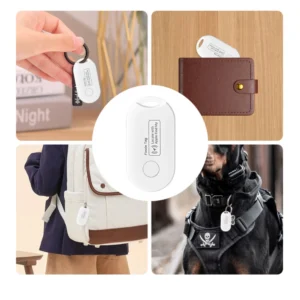
On that rainy day last month, I was so busy that my brain was almost out of order. I finally got off work and walked home slowly in the rain. As I walked, I felt my hand in my pocket! Lost the key? I was confused and had a crazy memory: Did I leave it in the company drawer? Or on the way! Cell phones, wallets, and keys are my lifeblood!
In the old days, I’d be running in circles like a cat on hot bricks. But that day also don’t know how to return a responsibility, may be work grind“Heart like still water”, incredibly didn’t as usual flustered not line. Looking for a quick fix, I opened my phone’s“Find” app! The key appears on the screen in front of a nearby convenience store! I patted my forehead and remembered that I’d dropped it while scrambling for coffee.
Follow the directions on your phone and before you get to the door of the convenience store, the tiny anti-lost device on your key is beeping like it’s saying, “Come find me.” I’ve got the key back!
This isn’t a sci-fi movie, but smart tags are here to stay, and they’ve crept into our lives. We can use them to find our keys, our wallets, our luggage, our pets. Recently brush short video, a lot of bloggers are sharing with smart tags god operation, really more and more fire, more and more practical. In today’s article, we’ll talk about these“Invisible little helpers” and see how different types of smart tags work and what scenarios they’re suitable for.

The rise and definition of smart tags
What is a smart tag?
Simply put, a Smart Tag is a small device that uses wireless technology to help us quickly locate, identify, track or manage objects. They are often small, like keychains or stickers, but have hidden technology inside, such as Bluetooth, NFC, GPS, and RFID.
You can think of a smart tag as an object’s“Electronic id” or“Pocket radar”. Hang it on your keys, wallet, suitcase, pet collar or even your child’s school bag and you’ll know where it is at all times via an App or device, even when something is lost, forgotten or lost, you will be alerted at the first opportunity to help you get it back quickly.
With the development of science and technology, smart tags are not only simple anti-lost tools, but also widely used in life, travel, shopping, office, logistics and other scenarios, which improves our sense of security and convenience. They are small and insignificant, but at the critical moment, they can really help.
A few quick examples:
Lost Your Wallet? Turn on your phone and locate it in a few seconds
Going out to walk your dog? Put a smart tag on your pet and keep your phone on your toes
Fear of misplacing your luggage? Suitcases are equipped with smart tags that monitor movement remotely
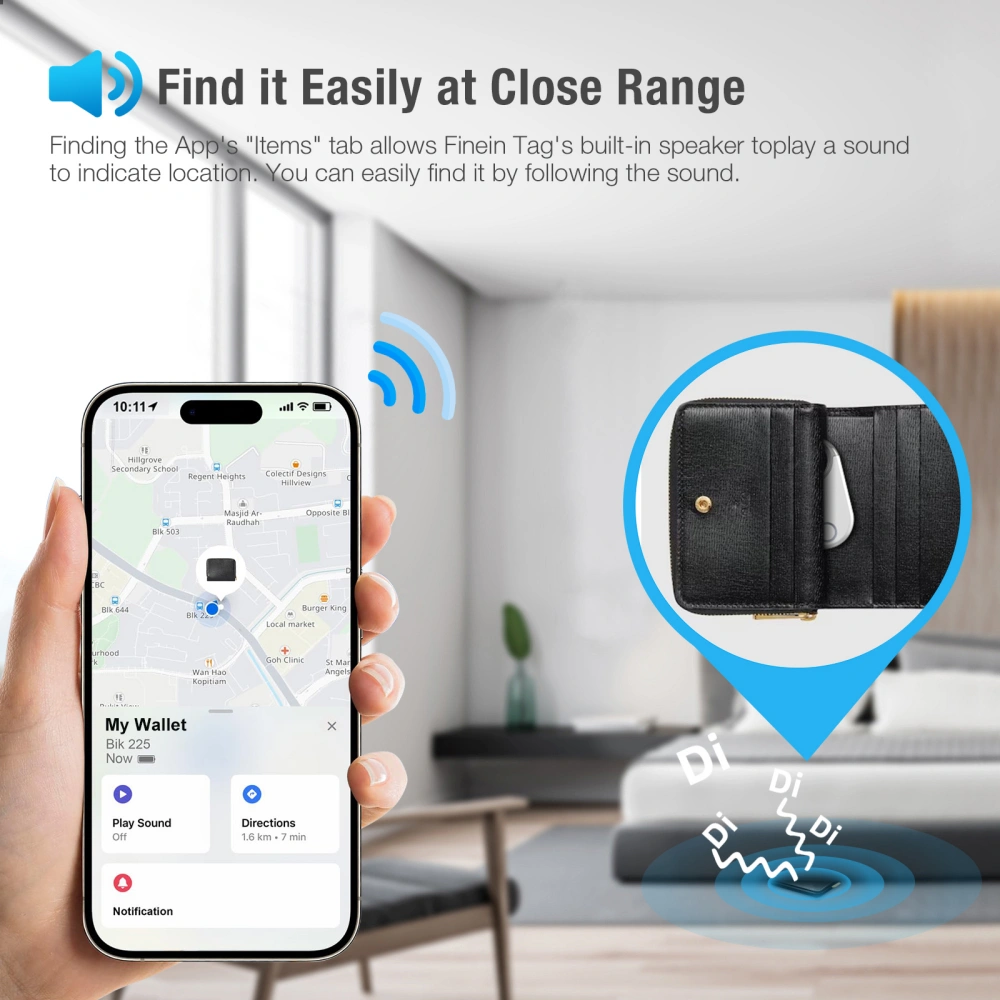
Can’t find your keys or remote control? Click on a smart tag and it beeps to locate you.
Nowadays, smart tags have been widely used in all aspects of our lives, and become a good helper to retrieve items, ensure safety and facilitate management. Whether it is keys, wallets, luggage, pets, children, the elderly, or even home appliances, office equipment, mall goods, smart tags can help you locate things quickly, prevent them from getting lost, and make management more efficient. They are small and portable, simple to use, is quietly changing our way of life, so that items more secure, more comfortable life, convenient.
This article will discuss different types of smart tags in detail, including their characteristics, application scenarios and development prospects.
Introduction to various smart tags
Part I: smart tags based on near field communication (NFC)
1. NFC technology overview
NFC, short for Near Field Communication, is the wireless exchange of data over very short distances, using a cell phone or other device. NFC works like a public transport card, access card, it through electromagnetic induction to achieve short-range non-contact communication, usually within 10 cm distance.
In our daily life, we often see NFC apps, such as swiping your phone to take buses and subways, swiping your phone to pay, or some situations where you need your phone to“Post” information, the technology behind them is NFC.
An NFC tag is usually a small, thin chip that can be made into stickers, cards, or even embedded in various objects. It doesn’t need a battery, and can be powered by an electromagnetic field generated by an external device, such as a mobile phone, which is both environmentally friendly and convenient.
2. Features of NFC Tags
Pros:
Low Cost: the manufacturing cost of NFC tags is very low, suitable for large-scale popularization, common in access cards, commodity labels, notes, etc. .
Passive design: no need for built-in batteries, long service life, daily maintenance-free.
High Security: due to the short communication distance, the risk of information leakage is relatively small, which is widely used in payment, access control and other scenarios with high security requirements.
Easy to operate: “Touch-to-use”, as long as the phone or other devices near the NFC tag, the system can automatically identify and perform operations.
Cons:
Short communication range: usually only works within a few centimetres and can not be used for long-range tracking or positioning.
Data transfer rate is relatively low: compared with Bluetooth, WI-FI and other technologies, NFC data exchange speed is slow, suitable for the transmission of small amounts of information, but not for large data or complex interaction.
3. Main applications of NFC Tags
As NFC technology becomes more and more popular, we see it everywhere:
Mobile payments
One of the most common scenarios. By binding the bank card or bus card, users only need to support the NFC function of the mobile phone“Tap” to complete the payment, travel, very fast and convenient.
Reading and sharing information
Many stores, exhibitions, and product packaging have NFC tags that users can tap on their phones to view product descriptions, promotions, web sites, and even download apps or add contacts, compared to traditional QR codes, it is more convenient and hidden.
Smart home control
In smart home scenarios, NFC tags can be used to quickly control devices. For example, if you put an NFC tag on your bed, your phone will automatically turn off the lights and close the curtains. If you put an NFC tag on your phone before you go out, all the appliances in your home will automatically shut off, saving you time and time.
Asset Management and inventory taking
In the supermarket, warehouse, logistics industry, NFC tags are widely used in goods, equipment management and tracking. The staff only need to use the scanning equipment with a light stick, can quickly complete the item information input, inventory, out of storage registration and other operations, greatly improving efficiency.
4. Future trends
As a mature and low-cost technology, NFC will play a greater role in the Internet of things in the future.
With the popularization of more and more smart devices, NFC tags are not only“Code scanning tools”, but also become an important part of the Internet of things. The future may include:
More senseless payment and identity recognition in life scenarios, such as community access control, company attendance, parking fees, etc.
With the smart home system more in-depth combination, to achieve“Paste a stick” can control the home equipment;
It plays an important role in product anti-counterfeiting and information traceability. Consumers only need to use their mobile phones to get close to products, they can identify authenticity and obtain production information, and shopping is more comfortable.
It can be expected that NFC tags will continue to use its“Low cost, easy to use, strong concealment” advantage, into all aspects of our lives, become an indispensable assistant in intelligent life.
Well, here’s the full text of the consumer-friendly, easy-to-understand“RFID-based smart tags”* * , suitable for part two:
Part Two: smart tag based on RFID
Overview of RFID technology
RFID, or Radio Frequency Identification, is a technology for automatic Identification and data exchange using Radio Frequency signals.
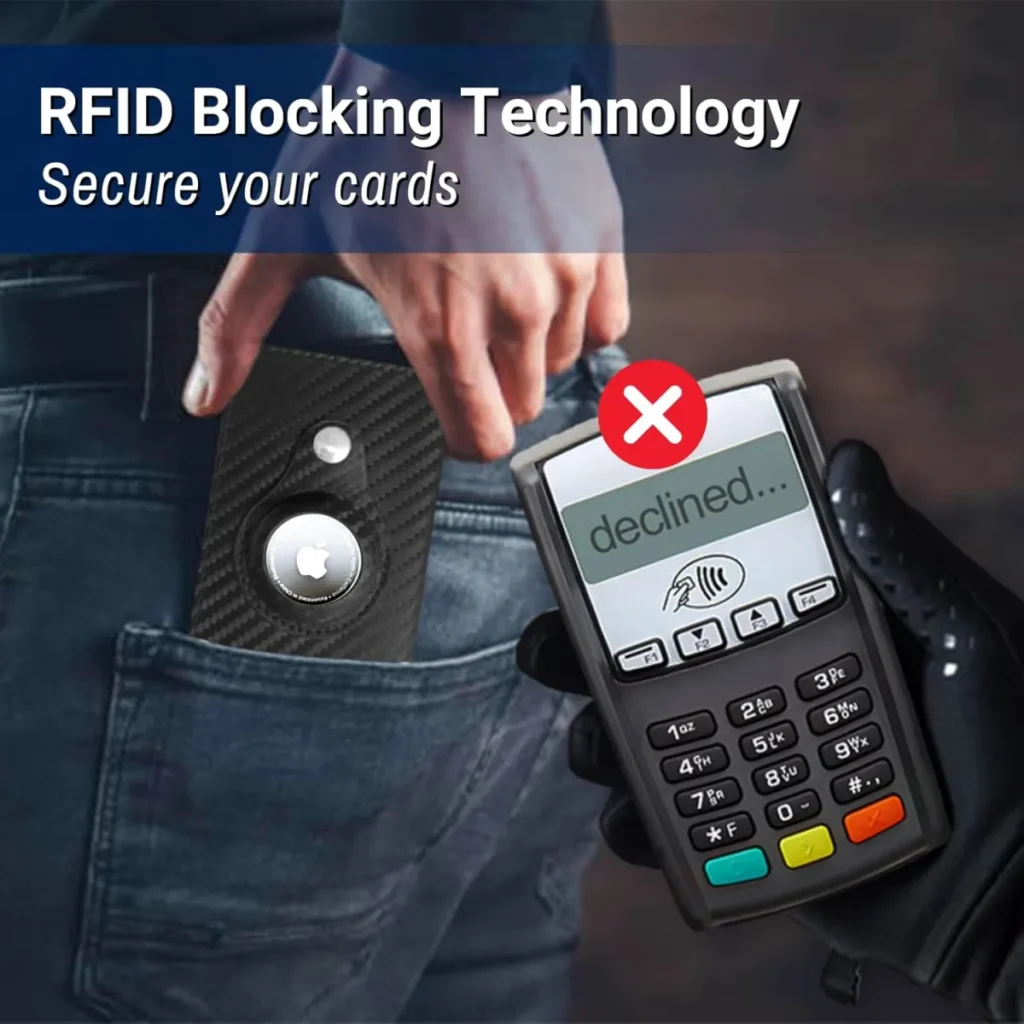
In simple terms, an RFID tag is like an“Electronic ID card” attached to an object. It has chips and antennas that store information, and when a dedicated reader, such as an RFID scanner, sends out a radio signal, the tag automatically responds and transmits its identity.
Compared with NFC, RFID has longer communication distance and stronger function, and is widely used in logistics, warehousing, retail, transportation and other scenarios.
2. Characteristics of RFID tags
Pros:
Long reading distance: depending on the type, up to tens of meters, suitable for a wide range of items tracking and management.
Batch identification: without touching one by one, multiple tags can be quickly scanned at the same time, greatly improving efficiency.
No contact: even if the label is hidden in the packaging, clothing, equipment, can also be read normally, dust-proof, stain-proof ability.
Many types: according to different needs, there are low frequency (LF) , high frequency (HF) , ultra high frequency (UHF) and other RFID tags, to meet different scenarios.
Cons:
The cost is slightly higher than NFC, especially some high-performance, environment-resistant tags are more expensive.
need dedicated reading and writing equipment, ordinary consumers daily use is not as convenient as NFC.
To some extent, it may be disturbed by environmental factors such as metals and liquids.
Main applications of RFID tags
Although many consumers don’t have much contact with it on a daily basis, RFID is already widely used where we can see it and where we can’t:
Logistics and warehouse management
RFID is most widely used in express delivery, warehousing and supply chain. By attaching RFID tags to goods, pallets and containers, staff can scan in batches over long distances, quickly complete warehousing and inventory, greatly improving efficiency and reducing human errors.
Anti-theft and traceability of goods
Many supermarkets, shopping malls label goods, in fact, built-in RFID chip. Through the access control scanning, prevent goods without settlement is taken away; at the same time, some brands also use RFID technology, record product production, transportation, sales process, convenient for consumers to trace the authenticity.
Traffic Management and electronic toll collection
RFID technology is behind the electronic toll collection (ETC) on highways and the automatic identification of car parks. The system can automatically read the tag information of the vehicle without stopping when the vehicle passes, and quickly complete the payment and identification.
Clothing, books, equipment management
In the clothing industry, RFID tags are widely used in commodity inventory management, fitting tracking; Some factories and hospitals also use RFID tags to track valuable equipment and medical devices to prevent loss.
Large-scale events and people management
In concert, exhibition and other places, RFID tickets, badges can be efficient verification of identity, statistics, improve security and management efficiency.
4. Future trends
As RFID technology continues to mature, chips become smaller, cheaper, and more powerful, it will enter more industries in the future, and even gradually penetrate into the lives of ordinary consumers.
In supermarket shopping and unmanned convenience stores, RFID tags are built into products to make shopping faster.
Household goods management: high-value items, luggage and important documents are managed through RFID tags.
medical industry: accurate tracking of drugs and patient information to improve medical safety.
Combination with the Internet of things: as an important part of the“Perception layer” of the internet of things, RFID realizes the comprehensive interconnection of smart devices and objects.
It can be predicted that RFID tags are not only the exclusive of logistics and supermarkets, but also expected to enter the ordinary family in the future, helping us manage items more efficiently, safely and intelligently.
Part 3: bluetooth-based smart tags
1. Overview of Bluetooth technology
Bluetooth is a short-range wireless communication technology, which is mainly used for fast and low-power connection between electronic devices. Compared with NFC and RFID, Bluetooth has longer communication distance and more functions. The most common applications are Bluetooth headsets, Bluetooth speakers, wireless pairing of phones and devices, etc. .

In recent years, the wide application of Bluetooth technology, especially Bluetooth Low Energy (BLE) , has given birth to a very practical smart tag — Bluetooth anti-lost device, also known as Bluetooth Tracker and Bluetooth locator. They can be paired with mobile phones or other devices to help users track and locate objects in real time, making them useful“Finders” in consumers’ daily lives.
2. Bluetooth tag features
Pros:
Easy to use: only need to connect with the mobile App can be used, simple and intuitive operation.
Moderate distance: general communication distance in dozens of meters to hundreds of meters, indoor and outdoor can be used, wide coverage.
Low-power electronics: Ble Technology, long battery life, some products can be used for more than six months to a year.
Multi-function: not only can locate and find items, but also has two-way search, mobile phone anti-lost alert, sound alarm, group assistance positioning and other practical functions.
Price friendly: Bluetooth smart tags on the market a rich variety of prices from a few dollars to dozens of dollars, suitable for different needs.
Cons:
Location relies on Bluetooth on your phone, which is limited if you’re out of range.
the accuracy is affected by the environment, and positioning deviation may occur in complex environments.
Compared with the GPS tag, the tracking range is still limited, and it is impossible to achieve ultra-long-distance real-time tracking.
3. Main applications of Bluetooth tags
Due to its practicability, portability and cost performance, Bluetooth smart tags have become the most commonly purchased and used smart tags by consumers. They are widely used in the following scenarios:

anti-lost and return of daily items
Keys, wallets, backpacks, luggage, headphone boxes, these small items once lost, often make people anxious. The Bluetooth anti-lost device is hung on the item, and can be positioned at any time through the mobile phone App. When the item exceeds the setting range, the mobile phone immediately reminds the user to find and retrieve it at the first time.
pets can be lost
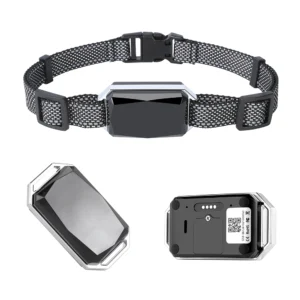
Bluetooth tags can also be attached to pets’ collars, allowing owners to quickly track their pets when they wander off or get lost while out walking their dogs or going to the park, some products also support audio cues to help find pets.
Two-way finder
Some bluetooth tags support reverse lookup. Not only can you use your phone to find an item by pressing a button on the tag, but you can also reverse lookup your phone. This is great for users who often forget where their phone is.
Group-assisted finding
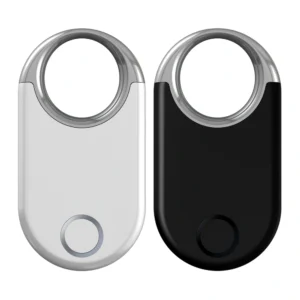
Products such as Apple AirTag, Tile, and Samsung SmartTag use a large user network to help other users anonymously locate items that have been lost at a distance, greatly improving the success rate of recovery.
Prevent loss of luggage
When traveling, put the Bluetooth tag into the luggage compartment for quick positioning in airports and stations to prevent luggage from being lost or taken by mistake.
4. Future trends
Bluetooth tags have become the mainstream of the market due to its practicability and technical maturity, and will continue to be optimized in the following directions in the future:
Positioning distance farther, higher accuracy, some products have been combined with ultra-wideband (UWB) technology, to achieve centimeter-level precision positioning;
longer battery life, reduced replacement frequency and improved ease of use
Seamless integration with more smart ecosystems, such as mobile phones, smart home, wearable devices linkage, to create a complete item management solutions;
The group assistance network is larger, the item retrieval rate continues to increase, and the user experience is more comfortable.
It can be said that bluetooth smart tags are becoming“Personal assistants” in consumers’ lives, whether it is anti-loss, positioning, reminding, or intelligent interconnection, bluetooth technology makes it easier than ever to find things.
Okay, here’s the clear, well-structured text for the average consumer: * * “Smart tags based on Wi-Fi, cellular (eSIM/NB-IOT) , and other communication technologies.”* * , for the fourth part of this article:
Part 4: smart tags based on Wi-Fi, cellular networks (eSIM/NB-IOT) , and other communication technologies
Overview of technology
In addition to NFC, RFID, Bluetooth these common short-range technologies, with the development of the Internet of things, more and more smart tags began to use Wi-Fi, cellular networks (such as ESIM card, NB-IoT) and other wide-area communication technologies, it breaks through the distance limit and realizes the real long-distance and global positioning and tracking.

These smart tags, which usually have a built-in SIM card or virtual eSIM, or support Wi-Fi networking, are independent of Bluetooth, NFC, etc. , it can upload real-time location and status information independently through mobile network and Internet of things platform, which is suitable for application scenarios that require wide-area tracking and long-distance anti-loss.
2. Characteristics of this kind of tag
Pros:
Global Positioning: thanks to cellular networks, WI-FI hotspots, cross-city, cross-country can be tracked.
Real-time location: no need to rely on mobile phone bluetooth connection, anytime and anywhere to view the location of items, information updates more timely.
Independence: Built-in SIM card or eSIM, some devices even do not need to bind to the mobile phone, independent networking, work.
Long battery life: Many devices use low-power electronics, such as NB-IoT technology, which can last for months or more.
Cons:
Higher cost: equipment prices, network traffic costs on the high side as a whole, suitable for high positioning needs of users.
⁇ the product volume is larger than the Bluetooth tag, so it can not be extremely small and hidden.
Rely on network coverage: make sure your environment has a cellular network or WI-FI signal, otherwise functionality will be limited.
3. Major application scenarios
Although slightly more expensive than NFC, Bluetooth, and RFID tags, these smart tags, with their wide-area, independent communications capabilities, play an important role in a number of key scenarios:
Anti-lost tracking of luggage and valuables across borders
Many international travelers and business travelers carry these eSIM-and Wi-Fi-enabled smart tags in their luggage and expensive backpacks. Even if the baggage is mistakenly transported by the airline, lost, users can also grasp the location of real-time items, greatly improving the recovery rate.
Pets, vehicles, key assets
Some high-end pet locators and car trackers have built-in SIM cards that allow real-time location uploads. If the pet lost, stolen vehicles, the user can be the first time through the mobile phone or computer location information, quick measures.
Safe Care for children and the elderly
For children, the elderly equipped with such internet-connected smart tags, especially for the higher risk groups lost. As long as the tags are on hand, families will be able to check their location via the App to ensure a safe trip.
Logistics Transportation and supply chain tracking
During the transportation of high-value goods, medical equipment and important documents, enterprises will use smart tags that support NB-IoT or cellular networks to monitor the location and transportation status of items in real time, reduce the risk of loss and damage, improve management efficiency.
Intelligent shared device management
Shared Bicycles, shared electric vehicles, rental equipment, etc. are generally equipped with such smart tags, which facilitate real-time positioning and scheduling of enterprises, and ensure equipment safety and operational efficiency.
4. Future trends
With the wide application of 5G, Internet of things and big data, technologies such as Wi-Fi, cellular network and NB-IoT will further promote the upgrading of smart tag functions:
More accurate positioning: combining satellite positioning, Wi-Fi hotspots, and big data analytics to provide a seamless indoor and outdoor positioning experience.
Smaller size: improved hardware integration, tag size continues to shrink, more hidden and convenient to use.
Cost more affordable: internet of things such as eSIM, NB-IoT prices continue to fall, ordinary consumers can easily afford.
Battery life: Low-power chips with smart sleep technology, device standby time significantly extended.
Combination with AI and Cloud Platform: realize more intelligent trajectory analysis, anomaly alarm and item management scheme.
It can be predicted that such high-performance and wide-coverage smart tags will play an increasingly important role in protecting personal safety, preventing the loss of valuables, logistics and transportation, and intelligent equipment management in the future, step into the life of more ordinary consumers.
Okay, so here’s the fifth part that’s consumer-oriented, articulate, logical, and useful: Smart Finders-take AirTag for example. Full content:
Part 5: Smart Finders-take AirTag as an example
1. What is a Smart Finder
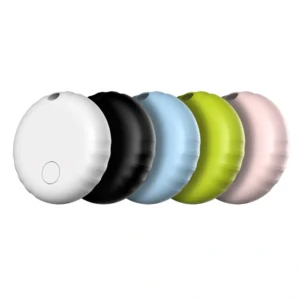
Intelligent Finder, also known as anti-lost device, intelligent tracker, intelligent location label, in short, is a kind of specialized for items, pets or personal belongings location, anti-lost and found the Smart label.
Compared to the NFC, RFID, and Bluetooth tags mentioned earlier, smart finders typically include:
Stronger positioning capabilities, support for Bluetooth, ultra-wideband (UWB) , global assistive networks and other multiple technologies;
⁇ easy to use with mobile apps, real-time location of items
⁇ pay more attention to the consumer experience, beautiful design, easy to carry, feature-rich;
When something is lost, it can be quickly recovered with the help of a global network of users.
Apple’s AirTag is the most prominent example of a product that has not only made smart finders useful, but has also helped to popularize them.
2. Take AirTag, for example. How smart finders work
The AirTag, a smart lookup device launched by Apple in 2021, is a small, coin-like device that incorporates Bluetooth, UWB technology and a small battery.

Here’s how it works:
On a day-to-day basis, the AirTag connects to an iPhone or other Apple device via Bluetooth and locates objects in real time.
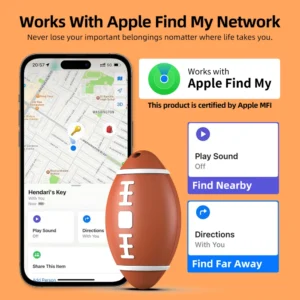
Once an item is out of Bluetooth range, AIRTAG uses hundreds of millions of Apple devices around the world to help locate it via a“Find My Network.”. As other Apple devices pass by, AirTag quietly communicates with them, updating their location and sending it back to the owner’s phone.
When approaching an item, AirTag uses UWB technology to locate it with centimeter-level accuracy. The phone prompts the user to quickly find the item with an arrow and a voice.
The AIRTAG is also waterproof and battery-swappable, making it ideal for everyday use.
This combined Bluetooth + UWB + global assistance network design greatly improves the success rate and convenience of retrieving lost items.
Common applications of smart finders
The usefulness of smart finders is reflected in many aspects of life, including:
Keys, wallets, backpacks can be found
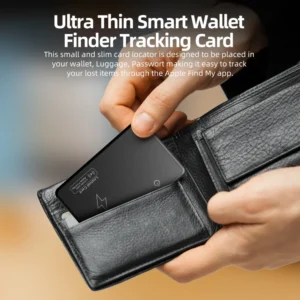
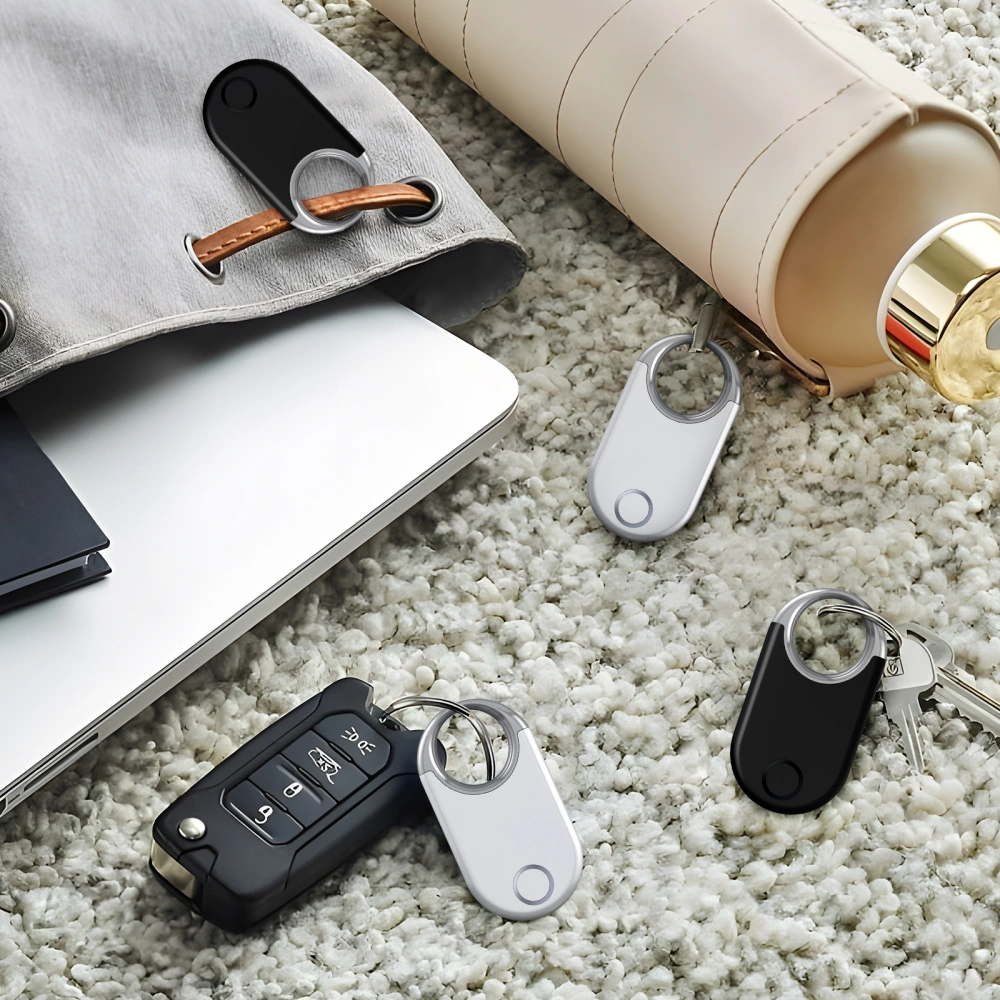
The most classic use scenario, to key rings, wallets, backpacks hang smart finder, mobile phone to check the location at any time, to avoid going out in a hurry can not find the item.
Prevent lost luggage, travel worry free
In the suitcase, carry-on bag placed intelligent finder, especially suitable for airports, stations and other crowded cluttered environment, easy to grasp the real-time movement of luggage, to prevent misappropriation, loss.
Pet tracking and positioning
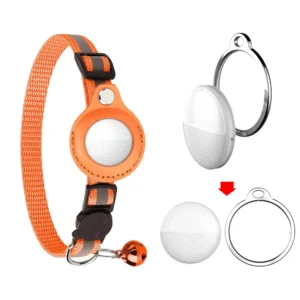
The anti-lost device will be hung on the pet collar, go out to walk the dog, visit the park, travel, easily grasp the pet location, avoid getting lost.
Prevent lost children
Some parents will put the smart finder into their children’s schoolbags and clothes pockets, and use mobile apps to check their children’s location in real time to ensure their safety.
Management of important items
Intelligent finders are installed on important items such as notebook bags, cameras and valuable equipment to prevent loss and facilitate positioning.
4. Other Smart Finder brands on the market
In addition to AirTag, there are smart finders available in a variety of brands and models for a variety of people:

Tile series: Old Brand Smart anti-lost device, support Android, Apple Systems, the global assistance network is huge.
Samsung SmartTag: designed for Samsung Galaxy devices, similar to AirTag.
Chipolo, Nut and other brands: Focus on cost-effective, functional and practical, suitable for general users.
For example, some domestic brands have launched android-and apple-compatible smart finders, which are affordable and suitable for users with limited budgets.
Different brands have differences in appearance, function, system compatibility and price. Consumers can choose suitable products according to their own needs.
5. Future trends
As technology advances, so do smart finders:
Positioning more accurate: UWB, GPS, Wi-Fi and other technology integration, improve indoor and outdoor positioning accuracy.
stronger network coordination: relying on the Global User Network, the success rate of item retrieval continues to increase.
Deep integration with intelligent ecology: seamless linkage with mobile phones, smart homes and wearable devices to create a complete intelligent life scene.
smaller size, longer battery life, wider range of applications.
More android-and apple-compatible products are available to meet the needs of different consumers.
It can be predicted that smart finders will gradually become a“Must-have” in our daily life, just as we are used to carrying keys and mobile phones with us, intelligent Finder will also become to protect the safety of goods, enhance the convenience of life, “Invisible Assistant.”.
Comparison of different types of smart tags
| Types | Technology basics | Main advantages | Typical application scenarios |
| NFC tags | Near-field communications | Low-cost, battery-free, easy code scanning | Access, payment, identification |
| RFID tags | Radio frequency identification | Remote Sensing, bulk reading | Logistics tracking, warehouse management, asset inventory |
| Bluetooth smart tags | BLE technology | Location-aware, mobile APP-compatible | Anti-loss, anti-theft, pets, Keys, luggage |
| UWB tags | UWB location | High-precision positioning, centimeter-level error | Indoor navigation, tracking of valuables |
| eSIM/NB-IoT tags | Cellular Internet of things | Ultra-long-range, wide-area coverage | Cross-regional management of vehicles, logistics and assets |
| Types | Cons | Price range (reference) |
| NFC tags | Very short range (within a few centimetres) and single function | Extremely low (< $1) |
| RFID tags | Some high frequency RFID price is higher, need to cooperate with special reading and writing equipment | Low to medium (a few cents to a few dollars) |
| Bluetooth smart tags | It relies on mobile phones, consumes more power than NFC/RFID, and has mediocre positioning accuracy | Medium to low ($1 to $10) |
| UWB tags | High cost, high power consumption, need UWB device support | High ($15-$40) |
| eSIM/NB-IoT tags | High Cost, SIM card data charges, real-time performance affected by signal | High ($20-$50 + data charges) |
Emerging Trends and the future
The following is a summary of emerging trends and future developments in smart tags, suitable for reporting, copywriting or market analysis:
I. Emerging Trends in smart labels
1. Integration of multi-mode communication technologies
On the basis of traditional Bluetooth, NFC and RFID, more and more smart tags begin to integrate various communication technologies such as UWB, eSIM, NB-IoT and Wi-Fi positioning to meet the needs of different scenarios.
Typical applications: Apple AirTag, Samsung SmartTag2 UWB function, improve indoor precise positioning ability.
2. Improving cross-platform compatibility
In the early days, smart tags were mostly biased towards a single ecosystem of Apple or Android. In the future, the development trend will be dual-platform compatibility of Apple and Android, which will improve the user base.
Example: some of the third-party tags on the market support both Apple FindMy and Android apps.
Smaller, thinner, more stealthy design
Driven by consumers’ aesthetics and practicality, smart tags tend to be miniaturized, thin and concealed, which are convenient to put in wallets, stick on the surface of items or be embedded in products.
4. Continuous strengthening of the positioning function
Precision from the traditional 10 meters level to centimeter level, UWB and high-precision GPS technology has become the mainstream trend, suitable for pets, valuables, children positioning and other high-demand scenarios.
5. Low power consumption and long battery life
The new generation of smart tags generally use Bluetooth low energy 5.3, NB-IoT power saving mode, battery life from a few months to 1-2 years or even longer.
6. Enhanced Security and privacy
The problem of tracking abuse has prompted manufacturers to strengthen anti-tracking reminders, identity encryption, authorization management functions, protect user privacy, and meet the legal compliance requirements of various countries.
7. Combining with AI and big data
Smart tag data is being combined with AI algorithms and big data analysis to be used in broader fields such as logistics tracking, asset management, supply chain optimization, and smart home automation.
II. Prediction of future development direction
1. Tags as sensors
Smart tags will no longer just be a positioning tool, in the future will integrate temperature and humidity, vibration, light and other sensing functions, widely used in cold chain logistics, valuable equipment monitoring and other fields.
2. Deep ecological integration of the Internet of things
Smart tags will become an important ecological IOT entrance, and smart home, vehicle systems, security systems seamless linkage, really achieve“Things connected.”.
3. Integration of wearable and smart tags
Some smart tags will be integrated with smart bracelets, name tags and smart clothing to expand their applications in new scenarios such as security, sports and medical monitoring.
4. Environmental and sustainable design
In the future, more environmental and recyclable materials will be used to promote the concept of green consumption and reduce e-waste.
5. Accelerating customization
For different vertical industries, such as logistics, medical, pets, cars, security, label function will be more professional, customized, enhance the application value of the industry.
Conclusion
Summary
Different types of smart tags have their own characteristics and are widely used in modern society:
NFC and RFID tags: suitable for close identification and batch data reading, widely used in access control, identification, logistics management;
Bluetooth smart tags: convenient and practical, support short-distance anti-lost and positioning, common in personal items, pets, key management;
UWB tags: centimeter-level high-precision positioning, suitable for high-end valuables tracking and indoor navigation;
eSIM/NB-IoT tags: Wide-area coverage and long-range location capabilities for logistics, vehicle and cross-regional asset management.
As an important part of the Internet of things, smart tags are gradually integrated into people’s daily life and all walks of life, greatly improving security, efficiency and convenience, and their important position is increasingly prominent.

Looking to the future
As technology continues to break through, smart tags will follow these trends:
Multi-technology convergence, enabling more powerful and flexible functionality
The deep integration of Smart label with AI, Big Data and cloud platform will help the construction of smart city, smart logistics and intelligent security
Design more miniaturization, environmental protection, application scenarios more diversified;
Security and privacy protection standards have been further improved, and the user experience has been continuously optimized.
In the future, smart tags will play a greater role in personal life, industrial management, public safety and other fields, and look forward to more innovation to promote its wide implementation and truly realize the interconnection of all things and smart life.